Sep 5, 2026Product & Industry Knowledge
How to Choose an Electric Motorcycle Manufacturer in China: B2B Buyer’s Guide
Learn how to choose an electric motorcycle manufacturer in China by evaluating factory capability, battery systems, QC, certifications, OEM/CKD support, software and after-sales service.
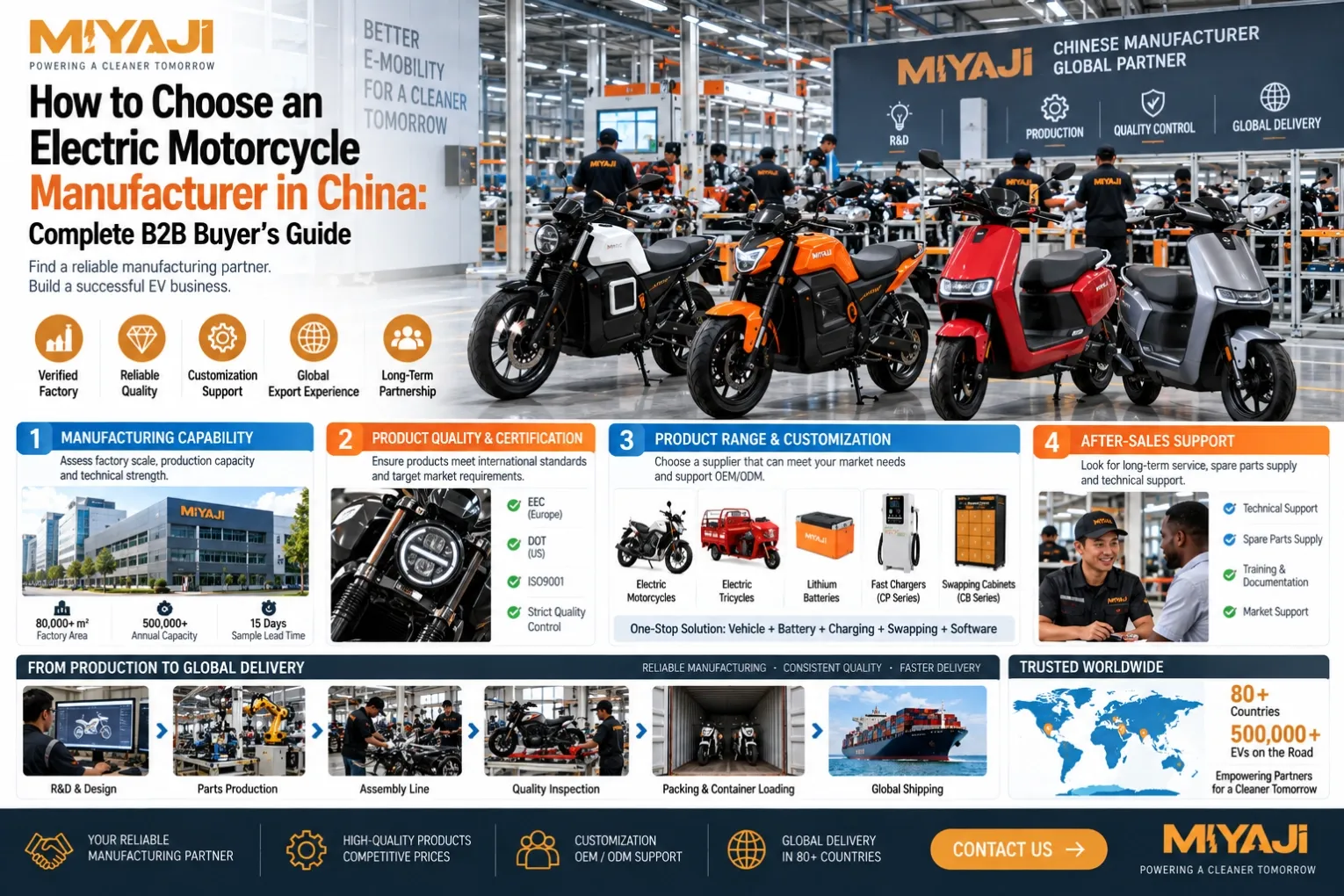
How to Choose an Electric Motorcycle Manufacturer in China: Complete B2B Buyer’s Guide
Finding an electric motorcycle manufacturer in China is not difficult.
Finding the right manufacturer for a commercial project is much harder.
A supplier may offer an attractive motorcycle and competitive quotation, but a commercial fleet project usually depends on much more than the vehicle itself.
The buyer may also need:
- Battery systems
- Charging
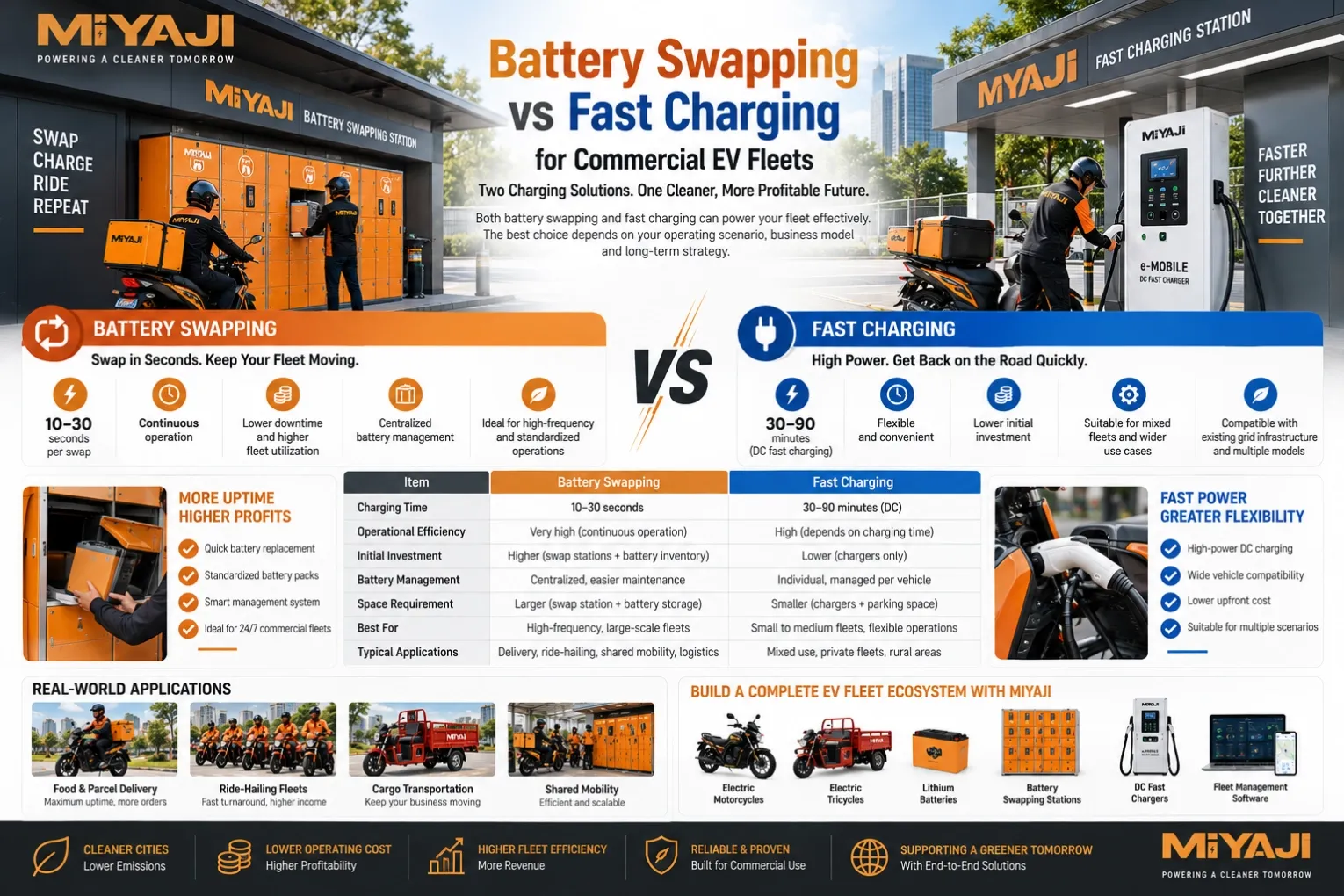
- Battery swapping
- Software
- Spare parts
- OEM customization
- CKD/SKD
- Local assembly support
- Technical documentation
- Long-term system compatibility
This means supplier selection should not begin with:
Who has the lowest unit price?
A better question is:
Which manufacturer can reliably support the complete project?
This guide explains how distributors, fleet operators and OEM buyers can evaluate electric motorcycle manufacturers in China.
1. Define What You Are Actually Buying
Before contacting suppliers, define the project.
Are you buying:
Finished Motorcycles?
For direct import and distribution.
Commercial Fleet Vehicles?
For delivery, passenger transport or fleet operations.
OEM Products?
Vehicles sold under your own brand.
CKD / SKD Kits?
For local assembly.
Integrated EV System?
Vehicle + battery + charging + swapping + software.
Different project types require different manufacturers.
A Good Consumer Motorcycle Supplier May Not Be a Good Fleet Supplier
A supplier focused on retail motorcycles may be very good at:
- Styling
- Consumer features
- Low-volume model variety
But a commercial fleet may require:
- Consistent configuration
- Heavy daily usage
- Spare parts
- Standardized battery
- Fleet connectivity
- Fast charging or swapping
- Long-term supply
The evaluation criteria are different.
2. Manufacturer or Trading Company?
This is one of the first questions international buyers ask.
But the answer is not always as simple as:
Factory good, trading company bad.
A manufacturer typically has stronger control over:
- Production
- Engineering
- Quality
- Customization
A trading company may still have sourcing or export advantages.
What matters is whether the supplier has direct control over the critical parts of your project.
What Should You Verify?
Ask:
- Where are the vehicles assembled?
- Who owns or controls the production line?
- Who handles engineering changes?
- Who performs final QC?
- Who is responsible for the warranty?
- Who controls the battery system?
- Who owns the software platform?
The more complex the project, the more important this becomes.
3. Check the Factory Capability
A factory visit or video audit can help buyers understand production capability.
Important areas may include:
- Frame production
- Welding
- Painting
- Vehicle assembly
- Electrical installation
- Testing
- Final inspection
- Packaging
Not every factory needs to manufacture every component internally.
What matters is whether the manufacturer controls the product and quality system.
4. Ask About Production Capacity Carefully
Suppliers often advertise large annual production numbers.
But capacity figures can be misleading without context.
Ask:
- What is the current output?
- How many production lines?
- What products share the line?
- What is the lead time?
- What is the maximum monthly capacity?
- What is the bottleneck?
For a project, actual available capacity matters more than headline capacity.
5. Evaluate Engineering Capability
A commercial EV manufacturer should be able to explain:
- Motor selection
- Controller matching
- Battery architecture
- Vehicle load
- Range
- Braking
- Suspension
- Charging
- BMS
If every answer is:
“We can customize anything.”
but no engineering questions are asked, that can be a warning sign.
Good Suppliers Ask Questions
A professional supplier should ask about:
- Target country
- Application
- Daily mileage
- Payload
- Speed
- Gradient
- Charging strategy
- Fleet size
- Local regulations
Why?
Because commercial vehicles should be configured around the operation.
6. Check Whether the Vehicle Is Designed for Commercial Use
Commercial electric motorcycles may operate:
- Many hours per day
- Across multiple shifts
- Under high mileage
- With frequent charging
- With delivery loads
Therefore evaluate:
- Frame
- Suspension
- Brakes
- Motor
- Controller
- Wiring
- Connectors
- Waterproofing
- Serviceability
A visually attractive motorcycle is not enough.
7. Evaluate the Battery System
The battery is one of the most important parts of an electric motorcycle.
Ask:
- What chemistry is used?
- Which cells?
- What voltage?
- What capacity?
- What BMS?
- What current capability?
- What charging method?
- Fixed or swappable?
The manufacturer should understand the battery at the system level.
8. Ask Who Makes the Battery PACK
Possible situations include:
In-House PACK
The manufacturer controls PACK design and assembly.
Strategic Battery Supplier
The vehicle factory works with a specialized battery partner.
Generic Third-Party Battery
The supplier purchases standard batteries.
None of these structures is automatically wrong.
But the buyer should understand:
Who is responsible for battery compatibility and quality?
9. Check Cell Traceability
For commercial projects, ask whether the battery supplier can provide information such as:
- Cell brand
- Cell model
- Batch
- Testing records
- PACK serial number
Traceability becomes especially important when fleets grow.
10. Check BMS Capability
The BMS should be matched to the battery and vehicle.
Depending on the project, it may monitor:
- Voltage
- Current
- SOC
- Temperature
- Faults
- Communication
For connected fleets, BMS communication becomes especially important.
11. Fixed Battery or Swappable Battery?
If your project may use battery swapping, confirm this early.
A swappable battery requires:
- Standardized dimensions
- Mechanical interface
- Connector
- Locking
- Communication
- Battery ID
- Station compatibility
Battery swapping cannot usually be added properly at the end of the vehicle design.
12. Fast Charging Capability
If fast charging is important, ask the manufacturer to explain the full charging architecture.
That includes:
Cell
-
PACK
-
BMS
-
Connector
-
Charger
Do not evaluate fast charging from charger power alone.
13. Ask About Charging Equipment
Some motorcycle manufacturers provide only vehicles and batteries.
Others can support charging infrastructure.
Depending on the project, buyers may need:
- Standard chargers
- High-power chargers
- DC fast chargers
- Depot charging
- Charging management
Integrated compatibility can reduce project complexity.
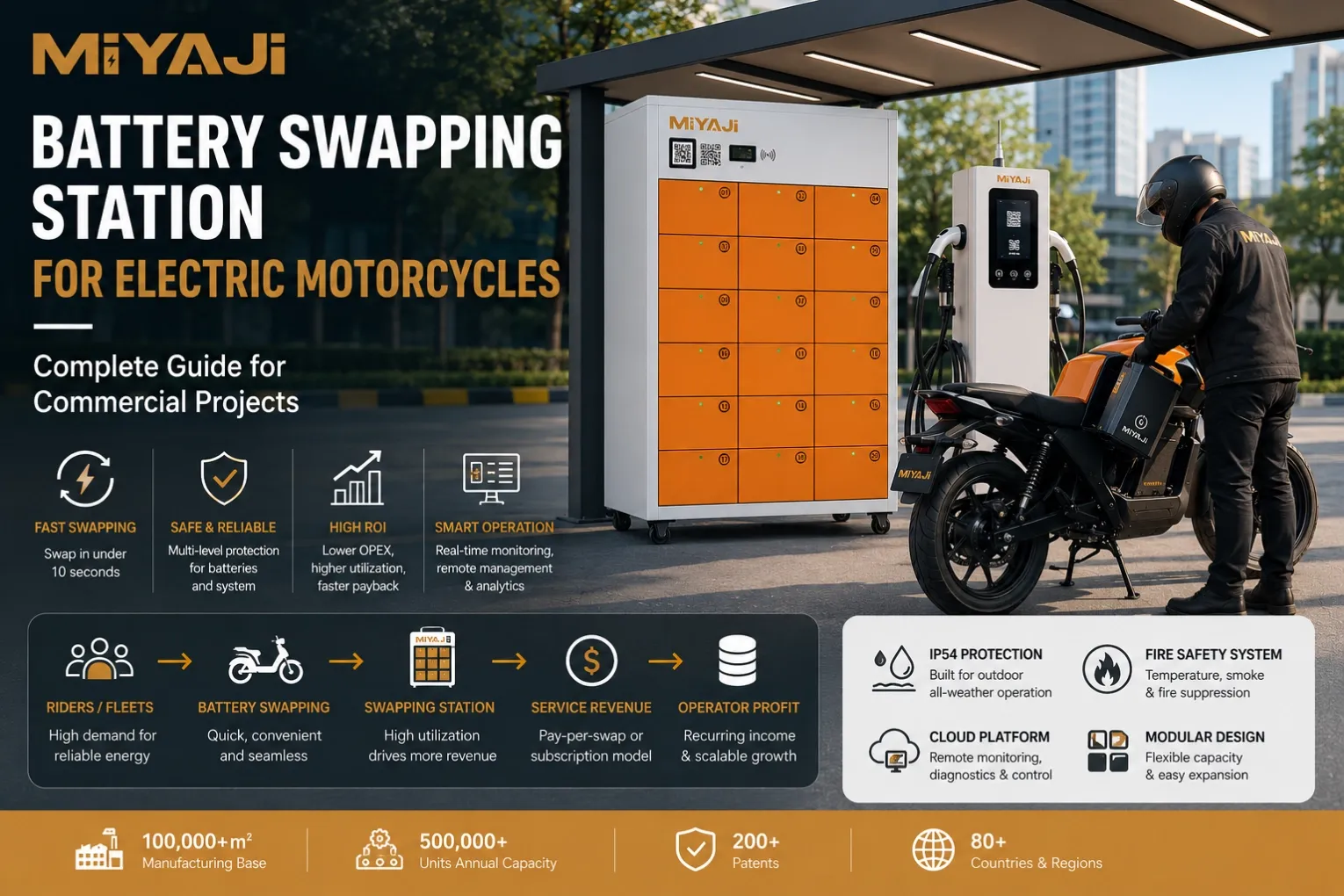
14. Ask About Battery Swapping Equipment
If the project requires swapping, evaluate:
- Cabinet architecture
- Slot quantity
- Battery compatibility
- Charging modules
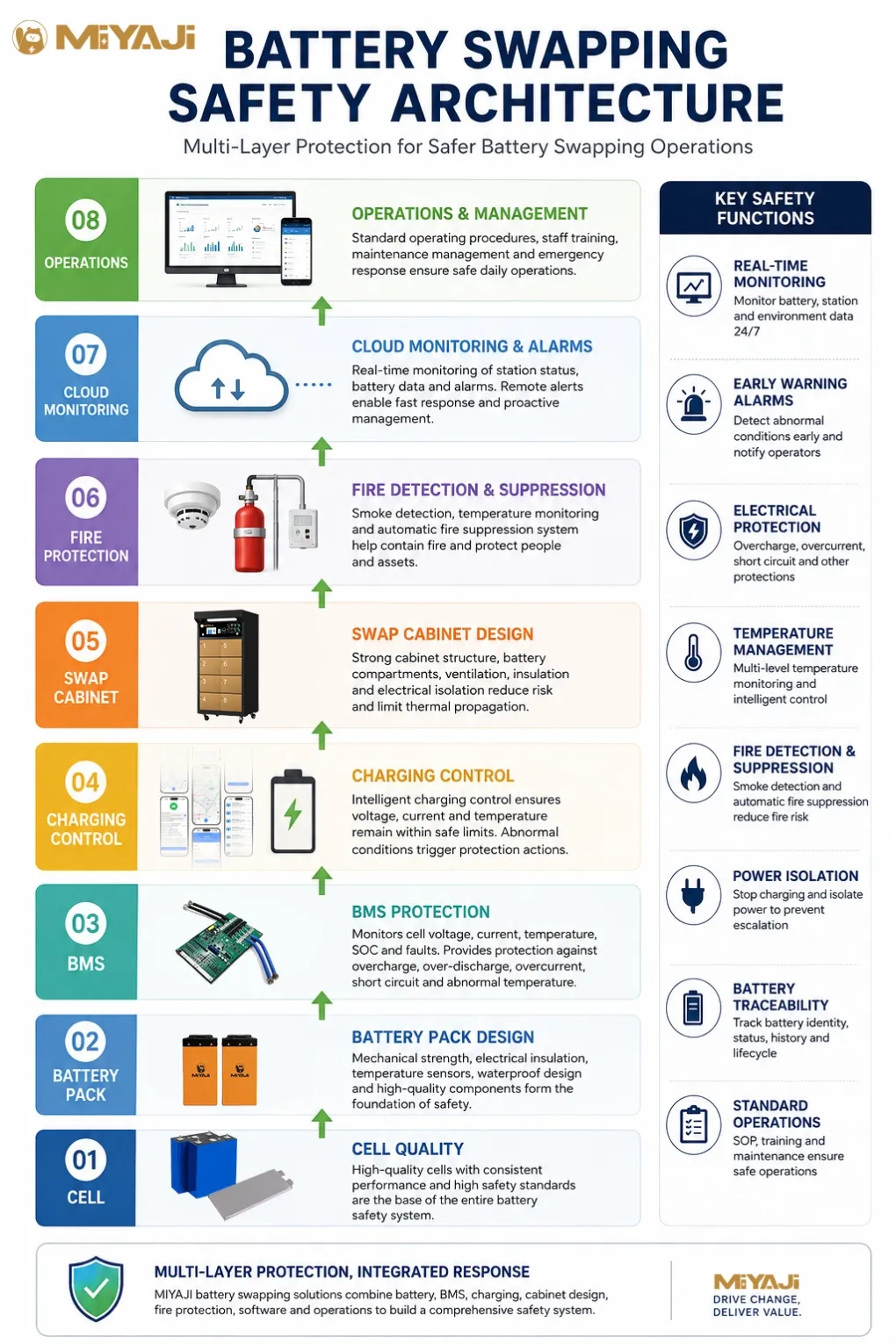
- Safety
- Software
- Remote monitoring
The swap station should be evaluated as part of the energy system.
15. Software Capability Is Becoming More Important
For commercial fleets, software can connect:
- Vehicles
- Batteries
- Chargers
- Swap stations
- Riders
- Maintenance
A manufacturer does not necessarily need to develop every line of software internally.
But it should be able to integrate the hardware into a usable system.
16. Ask About Vehicle Connectivity
Depending on your project, you may need:
- GPS
- IoT
- Remote diagnostics
- Battery monitoring
- Vehicle status
Ask which data can actually be collected.
Do not accept a dashboard demonstration without understanding where the data comes from.
17. Ask About APIs
Large fleet operators may need to integrate with:
- Delivery platform
- ERP
- Payment system
- Local app
- Fleet system
Ask whether the supplier supports API integration.
This can become important later even if the first pilot does not require it.
18. Evaluate Quality Control
A strong supplier should have quality checks throughout production.
Possible stages include:
Incoming Inspection
↓
Process Inspection
↓
Electrical Testing
↓
Vehicle Function Test
↓
Final Inspection
The exact process varies by manufacturer.
19. Ask What Is Tested Before Shipment
Depending on the vehicle, testing may include:
- Lights
- Brakes
- Motor
- Controller
- Charging
- Battery
- Dashboard
- Communication
- Vehicle functions
Ask for the actual QC checklist if available.
20. Ask About Road Testing
Commercial vehicles should ideally be validated under realistic conditions.
Relevant tests may include:
- Loaded driving
- Range
- Hill climbing
- Braking
- Suspension
- Repeated operation
The test conditions matter.
21. Avoid Vague Range Claims
A supplier may advertise:
200 km range
Ask:
- Which battery?
- What speed?
- What payload?
- What route?
- What temperature?
Range without conditions is not useful for commercial procurement.
22. Ask About Certifications
Certification requirements vary by destination market.
Depending on the country, buyers may need to consider:
- Vehicle homologation
- Electrical requirements
- Battery transport documentation
- Charger compliance
Do not assume one certification covers every market.
Verify requirements locally.
23. Battery Shipping Documentation
Lithium batteries can require specific transportation documentation.
Depending on product and shipping method, buyers may need documents such as:
- UN38.3
- MSDS/SDS
- Transport-related documents
The exact requirements should be confirmed with the relevant logistics provider and destination rules.
24. OEM Capability
If you are building your own brand, evaluate the manufacturer's OEM capability.
Potential customization may include:
- Logo
- Vehicle color
- Graphics
- Packaging
- Display
- App
- Documentation
But real OEM capability is more than changing a sticker.
25. Product-Level Customization
Deeper customization may involve:
- Motor
- Battery
- Controller
- Suspension
- Brakes
- Cargo structure
- Charging architecture
This requires engineering validation.
The more customized the vehicle becomes, the more important testing is.
26. ODM Capability
ODM projects may involve more substantial product development.
Ask:
- Who handles engineering?
- How are drawings controlled?
- How are prototypes tested?
- Who owns tooling?
- How are revisions managed?
These issues should be clarified before development.
27. CKD and SKD Capability
If you plan local assembly, ask whether the manufacturer supports:
SKD
and/or
CKD.
A CKD supplier should understand more than simply disassembling a finished motorcycle.
28. What Should CKD Support Include?
Depending on the project:
- BOM
- Assembly sequence
- Packaging
- Tools
- Equipment
- QC
- Training
- Documentation
- Spare parts
A mature CKD project is a production system.
29. Assembly Line Support
For larger localization projects, ask whether the manufacturer can help plan:
- Factory layout
- Assembly stations
- Tooling
- Testing equipment
- Production flow
- QC
This becomes especially important when the local team has limited manufacturing experience.
30. Battery PACK Localization
Some projects may eventually localize battery PACK assembly.
This requires:
- Cell inspection
- Cell grading
- Welding
- BMS
- PACK assembly
- Testing
- Aging
- Quality control
It should be treated as a separate manufacturing process from vehicle assembly.
31. Spare Parts Support
Spare parts can determine fleet uptime.
Before ordering vehicles, ask:
- Which parts are fast-moving?
- Which parts are critical?
- What stock is recommended?
- What is the lead time?
- How are spare parts ordered?
This is especially important for overseas projects.
32. Spare Parts Standardization
Using too many unique parts across models can increase:
- Inventory
- Training
- Maintenance complexity
For fleets, a more standardized product platform can be valuable.
Ask whether key components are shared across models.
33. After-Sales Support
Commercial buyers should ask how technical problems are handled after delivery.
Potential support may include:
- Remote diagnostics
- Technical manuals
- Training
- Video guidance
- Spare parts
- On-site support for larger projects
The required level depends on project scale.
34. Technical Documentation
Useful documents may include:
- User manual
- Service manual
- Wiring diagram
- Parts list
- Maintenance instructions
- Battery documentation
Documentation becomes increasingly important for local service teams.
35. Training
Large projects may require training for:
- Drivers
- Technicians
- Battery teams
- Assembly staff
- Software operators
Training should be planned before deployment.
36. Check Communication Quality
Supplier quality is not only product quality.
Pay attention to how the team communicates.
Do they:
- Understand the project?
- Ask useful questions?
- Respond clearly?
- Explain limitations?
- Follow up accurately?
Poor communication during quotation can become much worse during project delivery.
37. Don't Judge the Supplier Only by English Level
Good English is useful.
But excellent English does not necessarily mean strong engineering.
Likewise, a strong factory may rely on sales staff to coordinate with technical teams.
Evaluate:
Communication + Technical Accuracy + Execution
together.
38. Ask Who Will Manage Your Project
For larger projects, identify:
- Commercial contact
- Engineering contact
- Quality contact
- Delivery contact
- After-sales contact
Clear responsibilities reduce confusion.
39. Compare Quotations Correctly
Do not compare quotations only by the final price.
Make sure they include equivalent:
- Motor
- Battery
- Charger
- BMS
- Accessories
- Packaging
- Spare parts
Otherwise two “same motorcycles” may not actually be the same configuration.
40. Build a Technical Comparison Sheet
A useful supplier comparison can include:
Category | Supplier A | Supplier B | Supplier C |
|---|---|---|---|
Vehicle Platform | | | |
Motor | | | |
Battery | | | |
Cell | | | |
BMS | | | |
Charger | | | |
Fast Charging | | | |
Battery Swapping | | | |
Software | | | |
OEM | | | |
CKD | | | |
Spare Parts | | | |
Lead Time | | | |
Warranty | | | |
This makes the decision more objective.
41. Compare TCO, Not Only FOB Price
For a fleet project:
FOB Price ≠ Total Cost
The complete economics may include:
- Vehicle
- Battery
- Freight
- Import
- Charging
- Maintenance
- Spare parts
- Downtime
A cheaper motorcycle can become more expensive over the fleet lifecycle.
42. Ask About Battery Replacement Cost
The battery may need replacement during the vehicle lifecycle.
Ask:
- Replacement battery price
- Compatibility
- Availability
- BMS requirements
- Future supply
A proprietary battery can create long-term dependency.
This is not necessarily bad, but it should be understood.
43. Ask About Long-Term Component Availability
Commercial projects may operate vehicles for years.
Ask how the supplier manages:
- Motor changes
- Controller changes
- Display changes
- Battery updates
- Connector changes
Uncontrolled component substitutions can create maintenance problems.
44. Configuration Change Control
For fleet buyers, it can be useful to establish:
Approved Configuration
The supplier should notify the buyer before changing critical components.
This helps maintain consistency across multiple orders.
45. Factory Audit
For larger orders, consider a factory audit.
The audit can evaluate:
- Production
- QC
- Warehouse
- Testing
- Traceability
- Management
The depth should match project risk.
46. Video Factory Inspection
If an in-person visit is not possible, request:
- Live video
- Production walkthrough
- Warehouse
- Testing
- Actual products
Pre-recorded promotional videos alone provide limited verification.
47. Visit the Factory When the Project Justifies It
For substantial OEM, fleet or CKD projects, visiting the manufacturer can be valuable.
Use the visit to evaluate:
- Production
- Engineering
- Quality
- Team
- Product testing
- Project capability
Do not spend the entire visit only in the showroom.
48. Request Samples or Pilot Vehicles
A commercial buyer should validate the product before large-scale deployment.
A sample or pilot can test:
- Performance
- Range
- Battery
- Charging
- Durability
- Maintenance
- Rider feedback
Use representative operating conditions.
49. Pilot Before Scaling
A strong procurement process can be:
Supplier Screening
↓
Technical Evaluation
↓
Sample / Pilot
↓
Data Collection
↓
Configuration Adjustment
↓
Scale
This reduces project risk.
50. Supplier Red Flags
Be cautious when a supplier:
- Cannot explain the battery
- Cannot explain test conditions
- Changes specifications frequently
- Avoids factory verification
- Gives inconsistent technical answers
- Promises every customization instantly
- Has no clear spare-parts plan
- Cannot explain QC
- Cannot identify who manages technical issues
One red flag does not automatically disqualify a supplier, but multiple inconsistencies deserve investigation.
51. Low Price Can Hide Configuration Differences
A quotation can be cheaper because of differences in:
- Cell quality
- Battery capacity
- Motor
- Controller
- Tires
- Brakes
- Frame
- Charger
- Accessories
Therefore compare:
Specification to specification
before comparing:
Price to price
52. Supplier Evaluation Scorecard
A simple scorecard can use:
Category | Suggested Evaluation |
|---|---|
Vehicle Engineering | Strong / Medium / Weak |
Battery Capability | Strong / Medium / Weak |
Charging / Swapping | Strong / Medium / Weak |
Software | Strong / Medium / Weak |
Factory Control | Strong / Medium / Weak |
Quality System | Strong / Medium / Weak |
OEM / CKD | Strong / Medium / Weak |
Documentation | Strong / Medium / Weak |
Spare Parts | Strong / Medium / Weak |
Communication | Strong / Medium / Weak |
Pilot Support | Strong / Medium / Weak |
The weighting should match your project.
53. What Should a Fleet Operator Prioritize?
Fleet operators may prioritize:
Uptime
Battery
Energy Strategy
Maintenance
Software
TCO
A fleet operator is usually less interested in having dozens of models than in having a stable, repeatable system.
54. What Should a Distributor Prioritize?
Distributors may additionally prioritize:
- Market suitability
- Product range
- Branding
- Spare parts
- Certification
- Pricing structure
- Product updates
They need both product competitiveness and supply stability.
55. What Should an OEM Buyer Prioritize?
OEM buyers may prioritize:
- Product control
- Customization
- Engineering
- Tooling
- Change management
- Branding
- Documentation
Long-term consistency becomes important.
56. What Should a CKD Buyer Prioritize?
CKD buyers should evaluate:
- BOM
- Packaging
- Assembly documentation
- Equipment
- Training
- Quality control
- Local technical support
A low CKD kit price alone is not enough.
Electric Motorcycle Manufacturer Checklist
Before choosing a supplier, verify:
Company
- Manufacturer role
- Factory location
- Production capability
- Export experience
Vehicle
- Commercial-use design
- Motor
- Controller
- Chassis
- Brakes
- Suspension
Battery
- Chemistry
- Cells
- Capacity
- BMS
- Traceability
Energy
- Charging
- Fast charging
- Battery swapping
Software
- Vehicle monitoring
- Battery monitoring
- Fleet platform
- API
Manufacturing
- OEM
- SKD
- CKD
- Local assembly
Quality
- Incoming QC
- Production QC
- Final test
- Traceability
Support
- Documentation
- Training
- Spare parts
- After-sales
How MIYAJI Approaches Commercial EV Manufacturing
For commercial EV projects, vehicle manufacturing is only one part of the system.
MIYAJI integrates project capabilities across:
Commercial Electric Motorcycles & Tricycles
-
Lithium Battery Systems
-
Battery Cells & BMS
-
Fast Charging
-
Battery Swapping
-
Fleet & Energy Management Software
-
OEM / CKD & Local Production
This allows buyers to evaluate the vehicle, battery, energy and software architecture together rather than sourcing each part independently.
For fleet, OEM and localization projects, the project can begin with:
Requirements
→ Configuration
→ Prototype / Pilot
→ Validation
→ Production
→ Deployment
Looking for an Electric Motorcycle Manufacturer in China?
To receive a meaningful project recommendation, prepare:
Target Country
Application
Initial Quantity
Future Quantity
Daily Mileage
Payload
Required Speed
Battery Requirements
Charging / Swapping Strategy
Software Requirements
OEM / CKD Requirements
Local Assembly Plan
This allows the manufacturer to evaluate the project as a complete commercial EV system.
Discuss Your Project With MIYAJI
Frequently Asked Questions
How do I find a reliable electric motorcycle manufacturer in China?
Evaluate factory capability, vehicle engineering, battery systems, QC, testing, spare parts, OEM/CKD capability, software and after-sales support rather than relying only on price.
Should I buy from a manufacturer or trading company?
It depends on the project. For complex commercial EV projects, direct control over engineering, production, battery integration, quality and after-sales is particularly important.
What should I ask an electric motorcycle manufacturer?
Ask about vehicle configuration, battery cells, BMS, charging, range test conditions, QC, certifications, spare parts, software, OEM, CKD and after-sales support.
How can I verify an electric motorcycle factory in China?
You can use an on-site visit, factory audit, live video inspection, production records, samples and pilot testing depending on project size and risk.
Can Chinese electric motorcycle manufacturers provide OEM services?
Many manufacturers support OEM, but the depth varies from branding changes to deeper vehicle and battery customization. Confirm engineering and testing capability.
What is the difference between OEM and CKD?
OEM refers to manufacturing products under a buyer's brand or specifications, while CKD refers to supplying vehicle components for local assembly. A project can involve both.
Can an electric motorcycle manufacturer also supply battery swapping systems?
Some can. Buyers should verify whether the vehicle, battery, cabinet and software are actually designed to work together.
Should I choose the cheapest electric motorcycle supplier?
Not necessarily. Commercial buyers should compare specifications, battery quality, reliability, spare parts, downtime and TCO in addition to purchase price.
Should I visit the factory before placing an order?
For larger fleet, OEM or CKD projects, a factory visit or independent audit can provide useful information about manufacturing, quality and engineering capability.
Should I start with a pilot before ordering a large fleet?
For a new market or operating model, pilot testing can help validate range, energy consumption, durability, charging and maintenance before scaling.
Can MIYAJI support OEM and CKD projects?
MIYAJI can support commercial EV projects involving vehicles, battery systems, charging, swapping, software and OEM/CKD/local-production requirements according to project scope.