
Aug 29, 2026Product & Industry Knowledge
How to Build a Battery Swapping Network for Electric Motorcycle Fleets
Learn how to build a battery swapping network for electric motorcycle fleets, from fleet sizing and battery design to station planning, software, pilot deployment and scale-up.
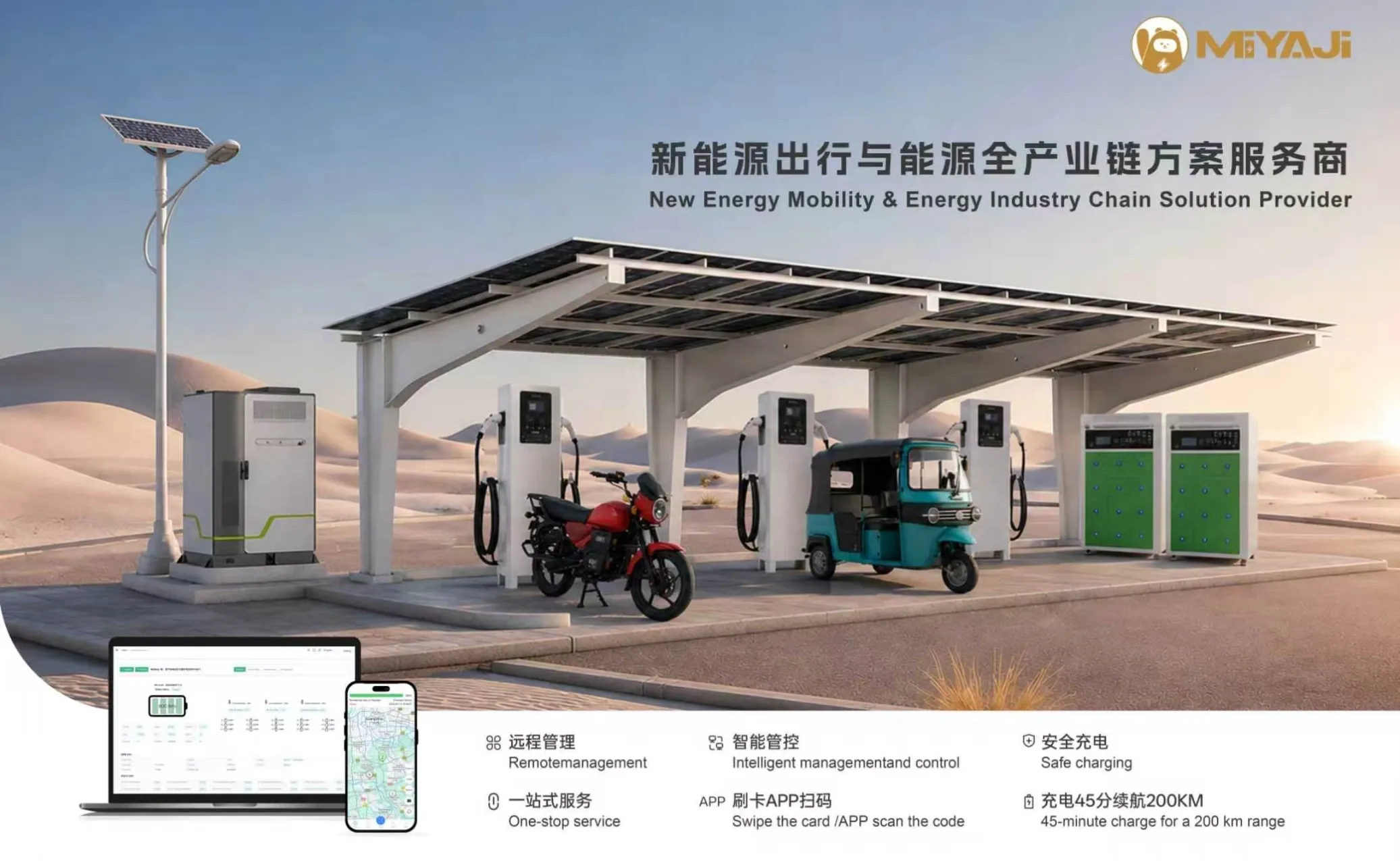
How to Build a Battery Swapping Network for Electric Motorcycle Fleets: From Pilot to Scale
Building a battery swapping network is not the same as buying battery swap cabinets.
A commercially viable network must coordinate:
Vehicles
-
Batteries
-
Swap Stations
-
Charging Infrastructure
-
Software
-
Locations
-
Operations
-
Business Model
If one part of the system is poorly designed, the entire network can suffer.
A fleet may have enough batteries but place them at the wrong stations.
A station may have enough slots but insufficient electrical capacity.
A vehicle may support swapping physically but use a battery that is difficult to standardize across the fleet.
Software may display station status but fail to provide the battery, billing or asset-management functions required by the operator.
That is why battery swapping should be planned as an energy network, not as a collection of individual products.
This guide explains how to move from initial fleet requirements to a pilot network and eventually to larger-scale commercial deployment.
What Makes Up a Battery Swapping Network?
A complete electric motorcycle battery swapping network normally has several layers.
1. Vehicles
Electric motorcycles or tricycles designed around a standardized removable battery architecture.
2. Batteries
Commercial battery packs with compatible:
- Voltage
- Capacity
- Dimensions
- Connectors
- BMS
- Communication protocol
- Locking mechanism
3. Swap Stations
Physical locations where depleted batteries are exchanged and recharged.
4. Charging Infrastructure
Power electronics and electrical systems used to recharge returned batteries.
5. Communication
IoT connections between batteries, stations, vehicles and the cloud platform.
6. Software
Used to monitor:
- Batteries
- Stations
- Vehicles
- Users
- Transactions
- Operational performance
7. Operating Network
Includes:
- Site selection
- Battery distribution
- Maintenance
- Customer service
- Billing
- Field operations
The important point is that these layers should be designed to work together.
Step 1: Define the Commercial Use Case
Before choosing batteries or cabinets, define exactly what kind of operation the network will support.
For example:
Delivery Fleet
High daily mileage
Frequent stops
Strong need for vehicle uptime
Passenger Motorcycle Fleet
Long operating hours
Variable routes
High rider utilization
Corporate Fleet
Predictable routes
Centralized vehicle management
Public Battery Swapping Network
Different rider types
Different travel patterns
Higher network-distribution complexity
These use cases may all involve electric motorcycles.
But their swapping requirements can be completely different.
Start by identifying:
- Who operates the vehicles?
- Who owns the batteries?
- Who owns the stations?
- How many vehicles are involved?
- How many hours per day do they operate?
- Where do they travel?
- How often will they need energy?
- How will users pay?
Those answers shape the entire network.
Step 2: Decide Whether Swapping Is Actually the Right Solution
Battery swapping should not automatically be selected simply because the vehicles are electric motorcycles.
First evaluate:
Daily mileage
Downtime tolerance
Parking patterns
Fleet size
Charging opportunities
Grid capacity
Battery standardization
A fleet that returns to a depot for eight hours every night may be well served by charging.
A multi-shift fleet operating continuously may benefit much more from swapping.
This is why the project should first compare:
Battery Swapping vs Fast Charging
before committing capital to either infrastructure model.
The goal is not to maximize technology.
It is to minimize the total operational friction and cost of keeping vehicles productive.
Step 3: Standardize the Vehicle and Battery Platform
This is one of the most important decisions in the entire project.
A swapping network becomes much easier to operate when the battery platform is standardized.
The network should define:
- Battery voltage
- Capacity class
- Physical dimensions
- Connector
- Communication protocol
- BMS architecture
- Battery identification
- Locking mechanism
- Charging interface
If different motorcycles require completely different batteries, the network becomes fragmented.
You may need:
Battery A for Vehicle A
Battery B for Vehicle B
Battery C for Vehicle C
That reduces battery flexibility and complicates:
- Station design
- Inventory
- Spare parts
- Software
- Maintenance
- Scaling
A commercial network should therefore consider battery standardization at the vehicle-design stage, not after vehicles have already been purchased.
Step 4: Calculate Fleet Energy Demand
The next stage is to determine how much energy the fleet actually requires.
A simplified formula is:
Daily Fleet Energy = Number of Vehicles × Daily Mileage × Energy Consumption per Kilometer
For example, imagine:
100 motorcycles
×
120 km/day
×
45 Wh/km
=
540 kWh of vehicle energy demand per day
This is only a planning example.
Actual energy consumption depends on:
- Vehicle weight
- Payload
- Route
- Traffic
- Speed
- Terrain
- Temperature
- Motor efficiency
- Rider behavior
The important thing is to calculate energy demand before calculating infrastructure.
Step 5: Estimate Swap Frequency
Once daily energy demand and usable battery capacity are known, estimate how often vehicles will need to swap.
Suppose the usable energy of a battery is approximately:
2.8 kWh
and one motorcycle consumes:
5.4 kWh/day
Then the vehicle may consume roughly two battery equivalents of energy per day.
But actual rider behavior matters.
Drivers may swap:
- Before reaching low SOC
- At convenient points along their route
- Before a long trip
- At shift changes
So planning should consider both:
Average Swaps per Day
and
Peak Swaps per Hour
This is critical because demand is rarely evenly distributed throughout the day.
Research on scooter swap-network planning similarly treats station capacity and demand distribution as interconnected variables rather than relying only on total daily energy.
Step 6: Size the Battery Pool
Now determine how many batteries need to circulate.
The battery inventory may include:
Batteries installed in vehicles
-
Batteries charging
-
Fully charged batteries ready for swapping
-
Operational reserve
Therefore:
Battery Quantity ≠ Vehicle Quantity
There is also no universal rule such as:
1.2 batteries per motorcycle
or
1.5 batteries per motorcycle
that works for every project.
The required ratio depends on:
- Daily mileage
- Battery capacity
- Charging time
- Swap frequency
- Peak demand
- Reserve requirements
- Station utilization
This is why the battery pool should be calculated together with charging capacity.
Step 7: Determine Charging Capacity
Every returned battery needs to be recharged before it can return to circulation.
That means the network must provide enough charging capacity to keep up with battery consumption.
Important variables include:
- Battery charging power
- Charging time
- Number of charging slots
- Simultaneous charging capacity
- Available electrical power
- Peak swap return rate
Suppose riders return 20 depleted batteries during a peak hour.
If the station can only charge a small number of batteries simultaneously, inventory may gradually become depleted even though enough physical batteries exist.
This is why battery count and charging-slot count must be designed together. Simulation research on motorcycle swapping specifically highlights the need to jointly estimate sufficient batteries and charging slots.
Step 8: Choose Station Locations
Once energy demand and station capacity are understood, decide where the stations should go.
Do not start with:
“Where can we rent cheap space?”
Start with:
“Where does the fleet actually need energy?”
Useful location inputs include:
- Vehicle routes
- Rider density
- Delivery zones
- Commercial centers
- Depot locations
- Shift patterns
- Peak swap demand
- Traffic access
- Electrical availability
Location and station sizing should be treated as one planning problem. Current network-planning research explicitly models site selection together with operational capacity and users' swapping choices.
A large centralized station may provide enough theoretical capacity but still perform poorly if riders regularly travel far out of their routes to use it.
Step 9: Think in Terms of Coverage, Not Just Station Quantity
Imagine two project designs.
Network A
5 very large stations
Network B
15 smaller stations
Which is better?
You cannot answer without knowing:
- Where riders operate
- How far they are willing to travel
- How concentrated demand is
- How much redundancy is required
- What electrical infrastructure exists
A network is useful when riders can reliably access energy where they need it.
Gogoro provides a mature example of this principle. Its SmartGEN system uses actual riding and swapping behavior along with other data to evaluate where new stations and additional capacity are required.
You do not need Gogoro's scale to apply the same principle.
Even a 100-vehicle fleet should plan around:
real routes + real demand + real operating behavior.
Step 10: Design Redundancy Into the Network
Commercial fleets cannot assume every station will always be available.
Ask:
What happens if one station goes offline?
What happens if the grid fails temporarily?
What happens if one location has unexpectedly high demand?
What happens if several batteries are removed for maintenance?
A network may therefore require:
- Reserve batteries
- Alternative nearby stations
- Remote monitoring
- Fault alerts
- Maintenance response procedures
- Backup operating plans
A system sized to work only under perfect conditions may be too fragile for commercial operations.
Step 11: Build the Software Architecture
As soon as multiple batteries and stations exist, software becomes a critical operating layer.
A battery swapping management platform may connect:
Vehicle
Battery
Station
Rider
Operator
Payment
Typical functions include:
- SOC monitoring
- SOH monitoring
- Battery ID
- Station status
- Slot status
- Battery inventory
- Swap records
- User management
- Subscription
- Billing
- Fault alarms
- Asset management
- Operational analytics
At larger scale, software can also help answer:
Which station needs more charged batteries?
Which battery should be removed from service?
Where should the next station be added?
Which location is underutilized?
Gogoro's network software, for example, uses real operating data to anticipate energy demand and guide both battery charging and future station placement.
Step 12: Decide the Business Model
A battery swapping network needs a financial model as well as an engineering model.
Common approaches include:
Fleet-Owned System
The fleet owns:
Vehicle + Battery + Station
Suitable when one company controls the complete operation.
Battery-as-a-Service
The battery is separated from the vehicle.
Users pay for access to energy rather than buying the battery with the vehicle.
Subscription
Users pay weekly or monthly.
Pay Per Swap
Users pay according to individual transactions.
Energy-Based Billing
Fees depend on energy consumed.
Franchise / Dealer Network
Local partners operate swap stations while the central platform manages batteries, software or branding.
These models produce different:
- CAPEX
- OPEX
- Revenue structures
- Asset ownership
- Software requirements
So the business model should be decided before the software and payment architecture is finalized.
Step 13: Start With a Pilot
For a new market, immediately deploying a large citywide network is often unnecessary.
A well-designed pilot can answer the questions that spreadsheets cannot.
The pilot should test:
- Real vehicle consumption
- Actual daily mileage
- Battery range
- Swap frequency
- Rider behavior
- Peak swap times
- Battery charging time
- Station utilization
- Software stability
- Electricity consumption
- Payment behavior
- Maintenance workload
The purpose of a pilot is not just to prove that:
“The vehicle can swap batteries.”
It is to prove that:
The complete business and operating system works.
What Should a Battery Swapping Pilot Measure?
A strong pilot should establish KPIs before vehicles begin operating.
Useful metrics include:
Vehicle KPIs
Daily mileage
Vehicle uptime
Energy consumption
Maintenance rate
Battery KPIs
Swaps/day
SOC at return
SOH
Charging time
Temperature
Battery utilization
Station KPIs
Swaps/station/day
Peak swaps/hour
Station uptime
Ready battery availability
Energy consumption
Rider KPIs
Average distance to station
Waiting time
Swap frequency
User retention
Financial KPIs
Energy cost
Revenue per rider
Revenue per station
Operating cost
Battery depreciation
Without predefined KPIs, a pilot can run for months without producing useful expansion data.
Step 14: Use Pilot Data to Optimize the Network
After the pilot, compare assumptions with reality.
You may discover:
Daily mileage was higher than expected
→ more energy needed.
Riders return batteries at 35% SOC
→ usable energy assumptions were wrong.
One station receives 60% of demand
→ station distribution needs adjustment.
Batteries recharge faster than expected
→ fewer spare batteries may be required.
A station is underutilized
→ relocation may be better than expansion.
This is why network planning should be iterative.
Recent research on micro-mobility swapping explicitly incorporates demand uncertainty and iterative refinement instead of assuming demand is known perfectly from the start.
Step 15: Scale in Phases
Once pilot economics and operations are validated, expand progressively.
For example:
Phase 1 — Pilot
20–50 vehicles
1–2 locations
Phase 2 — Commercial Validation
100–300 vehicles
Several strategic stations
Phase 3 — Network Expansion
Multiple fleet customers
Broader geographic coverage
Phase 4 — City or Regional Network
Multiple operators
Large battery pool
Centralized software platform
The exact numbers should not be treated as universal recommendations.
The important principle is:
Validate → Optimize → Expand
rather than:
Build everything → hope utilization follows.
How Network Requirements Change as You Scale
The biggest operational challenge changes at each stage.
Small Pilot
Main question:
Does the system work?
100–300 Vehicles
Main question:
Do we have enough batteries and station capacity?
Multi-Station Network
Main question:
Are batteries distributed correctly?
Large Commercial Network
Main question:
Can software predict demand and optimize assets across the network?
This is why large swapping systems become increasingly data-driven.
Gogoro says its SmartGEN platform evaluates more than 60 real-time parameters and uses actual network activity to manage charging and guide station expansion.
For MIYAJI customers, the lesson is not “copy Gogoro's network.”
It is:
Design the system so real operating data can improve future deployment decisions.
Battery Swapping Network Cost Structure
Network investment can generally be divided into:
Vehicles
Electric motorcycles or tricycles
Battery Inventory
In-vehicle + charging + ready + reserve batteries
Stations
Cabinets, charging modules and station hardware
Electrical Infrastructure
Power connection, distribution and installation
Software
Cloud platform, user management, payment and analytics
Sites
Rent, construction and installation
Operations
Maintenance, customer support, battery redistribution and technical service
This is why comparing projects only by:
price per cabinet
provides an incomplete picture.
A more useful metric is:
Total investment required to support the target fleet at the required service level.
Five Common Battery Swapping Network Mistakes
Mistake 1: Buying Stations Before Calculating Fleet Demand
Cabinet quantity should follow energy demand—not the other way around.
Mistake 2: Using Too Many Battery Models
Poor battery standardization increases inventory and station complexity.
Mistake 3: Ignoring Peak Demand
Enough daily energy does not guarantee enough batteries at 6 PM.
Mistake 4: Choosing Locations Only by Rent
Low-cost sites can become expensive if riders avoid them.
Mistake 5: Scaling Before Validating the Business Model
Hardware deployment cannot fix poor rider economics or an unsuitable payment model.
A Practical Battery Swapping Network Planning Framework
For a commercial project, the process can be summarized as:
1. Define Use Case
↓
2. Select Vehicle
↓
3. Standardize Battery
↓
4. Calculate Daily Energy
↓
5. Calculate Swap Demand
↓
6. Size Battery Inventory
↓
7. Size Charging Capacity
↓
8. Plan Station Locations
↓
9. Configure Software
↓
10. Define Business Model
↓
11. Deploy Pilot
↓
12. Measure KPIs
↓
13. Optimize
↓
14. Scale
That is the difference between a battery swap cabinet project and a battery swapping network project.
How MIYAJI Supports Battery Swapping Network Deployment
MIYAJI approaches commercial EV projects as an integrated system combining:
Commercial Electric Vehicles
-
Lithium Battery Systems
-
Battery Swap Stations
-
Fast Charging
-
Energy Management Software
-
OEM / CKD & Local Production Support
This allows project planning to begin with the operating requirements rather than with an isolated product.
Depending on the project, the evaluation can include:
- Vehicle configuration
- Battery specification
- Battery quantity
- Station capacity
- Charging power
- Network locations
- Software functions
- Payment requirements
- Pilot structure
- Expansion strategy
The goal is not simply to install swap cabinets.
It is to build an energy system that can support commercial vehicle operations as the fleet grows.
Planning a Battery Swapping Network?
To prepare an initial project discussion, provide:
Target Country / City
Fleet Type
Initial Fleet Size
Expected Future Fleet Size
Daily Mileage
Operating Hours
Battery Requirement
Operating Area
Business Model
Planned Pilot Timeline
From these inputs, an initial vehicle + battery + station + charging + software architecture can be evaluated.
CTA Button
Plan Your Battery Swapping Project
Frequently Asked Questions
How do you build a battery swapping network?
Start by defining fleet operations, vehicle and battery specifications, daily energy demand and swap frequency. Then calculate battery inventory and charging capacity, plan station locations, configure software and validate the system through a pilot before scaling.
How many battery swap stations does a city need?
There is no fixed number. Station quantity depends on vehicle density, travel routes, swap demand, station capacity, desired coverage and available electrical infrastructure.
How should battery swap station locations be selected?
Locations should be based on rider or fleet movement, energy demand, route density, electrical capacity, accessibility and redundancy—not rent alone.
How many batteries are needed in a swapping network?
The required inventory includes batteries installed in vehicles, batteries charging, ready batteries and operational reserve. The final quantity depends on mileage, battery capacity, charging time and peak demand.
Is software necessary for a battery swapping network?
For multi-station commercial operations, software becomes increasingly important for battery monitoring, station management, users, transactions, asset management and network optimization.
Should a battery swapping project start with a pilot?
For a new market or operating model, a pilot is usually valuable because it provides real data on vehicle consumption, rider behavior, swap demand, station utilization and operating cost before larger infrastructure investment.
Can a battery swapping network support multiple vehicle models?
Yes, but the project becomes significantly easier when vehicle models share standardized battery dimensions, electrical interfaces and communication protocols.