Sep 5, 2026Product & Industry Knowledge
Electric Tuk-Tuk for Passenger Transport: Complete Fleet Buying Guide
Learn how to choose an electric tuk-tuk for passenger transport based on seating, payload, range, motor power, battery, charging, safety, comfort and fleet TCO.
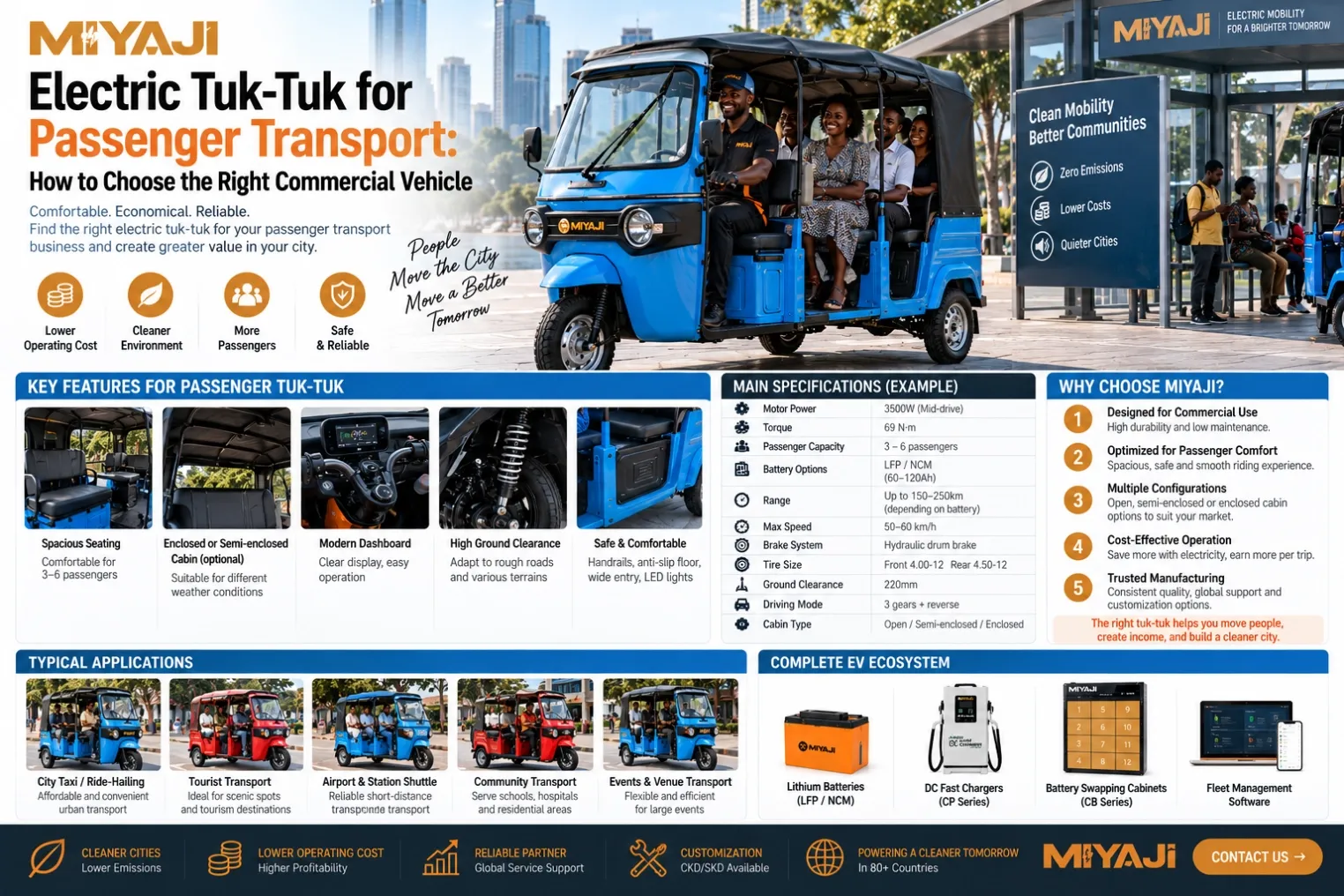
Electric Tuk-Tuk for Passenger Transport: How to Choose the Right Commercial Vehicle
An electric tuk-tuk is not simply an electric three-wheeler with passenger seats.
For commercial passenger operations, the vehicle becomes a revenue-generating asset.
It may operate:
- Many hours per day
- Across multiple shifts
- With changing passenger loads
- In frequent stop-and-go traffic
- Under different weather conditions
- With limited time available for charging
This means a commercial electric tuk-tuk should be evaluated differently from a personal electric tricycle.
The correct selection process is:
Passenger Operation
↓
Vehicle Capacity
↓
Route & Duty Cycle
↓
Motor & Chassis
↓
Battery
↓
Charging / Swapping
↓
Passenger Experience
↓
Maintenance & Uptime
↓
TCO & Revenue
This guide explains how fleet operators, distributors and mobility-project buyers can evaluate an electric tuk-tuk for commercial passenger transport.
What Is an Electric Tuk-Tuk?
An electric tuk-tuk is a three-wheel electric vehicle designed for short- and medium-distance passenger or commercial mobility applications.
Depending on the market and vehicle design, similar vehicles may also be called:
- Electric passenger tricycle
- Electric three-wheeler
- Electric rickshaw
- Electric auto-rickshaw
- Electric taxi tricycle
Terminology varies by market.
From a commercial procurement perspective, the more important question is not what the vehicle is called.
It is:
Can the vehicle reliably perform the required passenger operation?
Where Are Electric Tuk-Tuks Used?
Commercial applications can include:
Urban Passenger Transport
Short-distance trips within cities or communities.
Taxi Operations
Point-to-point passenger transportation.
Shuttle Services
Fixed or semi-fixed routes connecting locations.
Hotels and Resorts
Guest transportation within large properties or nearby areas.
Tourism
Short-distance sightseeing and visitor mobility.
Corporate and Industrial Sites
Employee or visitor transportation.
Community Transport
Local mobility where a compact passenger vehicle is suitable.
Different applications create different vehicle requirements.
1. Start With the Passenger Business Model
Before choosing the vehicle, understand how the operation earns revenue.
Possible models include:
- Driver-owned vehicle
- Fleet-owned taxi
- Vehicle rental
- Daily lease
- Ride-hailing
- Fixed-route shuttle
- Hotel/resort transport
- Corporate fleet
These models affect how important factors such as:
- Vehicle uptime
- Daily mileage
- Financing
- Battery ownership
- Charging downtime
become to the project.
2. How Many Passengers Will the Vehicle Carry?
Seat count is one of the first specifications buyers notice.
But passenger capacity should not be evaluated from seats alone.
Consider:
Driver
-
Typical Passenger Count
-
Maximum Passenger Count
-
Passenger Weight
-
Luggage
The vehicle must be engineered around its actual operating load.
Passenger Capacity vs Payload
Imagine a vehicle has space for several passengers.
That does not automatically mean its:
- Suspension
- Tires
- Brakes
- Motor
- Chassis
are configured appropriately for that load.
Commercial buyers should therefore ask for:
Rated vehicle payload
rather than evaluating only:
Number of seats
3. Passenger Space Matters
A passenger vehicle is not a cargo vehicle.
The interior should provide appropriate space for:
- Seating
- Legs
- Entry and exit
- Personal belongings
- Luggage where applicable
If passengers feel uncomfortable, the technical specifications alone will not create a good commercial transport service.
4. Entry and Exit
Passenger tuk-tuks may complete many trips every day.
Easy entry and exit can improve:
- Passenger convenience
- Boarding time
- Driver productivity
Consider:
- Step height
- Door opening
- Passenger access
- Handholds
- Seat position
This is particularly relevant for high-frequency passenger operations.
5. Driver Ergonomics
The driver may spend many hours per day inside the vehicle.
Evaluate:
- Driving position
- Seat comfort
- Visibility
- Steering effort
- Controls
- Dashboard
- Cabin space
- Ventilation
Driver comfort is not simply a luxury feature.
For commercial fleets, it can affect daily productivity.
6. Choose the Right Motor
Motor requirements depend on:
- Vehicle curb weight
- Passenger load
- Required speed
- Gradient
- Wheel size
- Acceleration requirements
A passenger vehicle operating mostly on relatively flat urban roads may require a different configuration from one serving routes with frequent gradients.
Motor Power Is Not the Whole Story
Two vehicles with the same motor wattage may perform differently.
Why?
Because performance also depends on:
- Motor design
- Controller
- Drivetrain
- Vehicle weight
- Wheel size
- Battery voltage
- Current capability
Therefore commercial buyers should evaluate the complete powertrain.
7. Torque and Loaded Performance
A passenger vehicle may need to accelerate repeatedly from low speed while carrying several people.
This makes loaded performance important.
Test:
- Starting
- Acceleration
- Hill climbing
with a realistic passenger load.
Do not rely only on an unloaded demonstration.
8. Hill-Climbing Performance
A supplier may advertise a climbing capability.
But buyers should ask:
At what vehicle load?
At what battery SOC?
At what speed?
Under what road conditions?
The test conditions determine whether the figure is meaningful for your operation.
9. Choose the Battery From the Duty Cycle
Battery capacity should be selected according to the operating model.
Start with:
Daily Mileage
but also calculate:
Distance Between Energy Replenishment
These are not necessarily the same number.
Example: Daily Mileage vs Battery Range
Imagine an electric tuk-tuk travels:
180 km per day
but returns to a terminal every:
60 km
If charging or battery swapping is available at the terminal, the vehicle may not need a battery capable of covering all 180 km at once.
This can reduce:
- Battery weight
- Battery cost
while maintaining the required daily operation.
10. Estimate Energy Requirement
A simplified calculation is:
Energy Required = Distance × Vehicle Energy Consumption
Suppose a hypothetical passenger three-wheeler consumes:
70 Wh/km
under a particular operating condition.
If it must travel:
80 km
between charging opportunities:
70 × 80 = 5.6 kWh usable energy
The final nominal battery should then consider:
- Operating reserve
- Usable SOC window
- Aging
- Environmental conditions
This example is illustrative only.
Actual Wh/km should be measured on the target vehicle.
11. Passenger Load Affects Range
An electric tuk-tuk carrying only the driver will not necessarily consume the same energy as one carrying a full passenger load.
Energy consumption can change with:
- Total weight
- Route gradient
- Traffic
- Speed
- Acceleration
- Temperature
- Tire pressure
Therefore commercial range testing should reflect realistic passenger operations.
12. Don't Buy Based on “Maximum Range”
A headline such as:
200 km Range
is incomplete without test conditions.
Ask:
Which battery?
What usable energy?
What speed?
What passenger load?
What route?
What temperature?
This allows range claims to be evaluated properly.
13. LFP vs NMC for Electric Tuk-Tuks
Both LFP and NMC can be considered depending on the vehicle.
LFP
Can be attractive where priorities include:
- Frequent commercial cycling
- Durability
- Cost
- Thermal stability characteristics
NMC
Can be attractive where:
- Battery weight is more constrained
- Battery installation space is limited
- Higher energy density is required
The final choice should be based on the specific cell and PACK design rather than chemistry name alone.
14. Fixed Battery
A fixed battery can be appropriate when:
- The vehicle has sufficient onboard battery space
- Overnight charging is available
- Daily range requirements are predictable
- Long natural charging periods exist
A larger fixed battery can reduce the need for mid-shift energy replenishment.
But it can also increase:
- Vehicle weight
- Cost
- Charging time
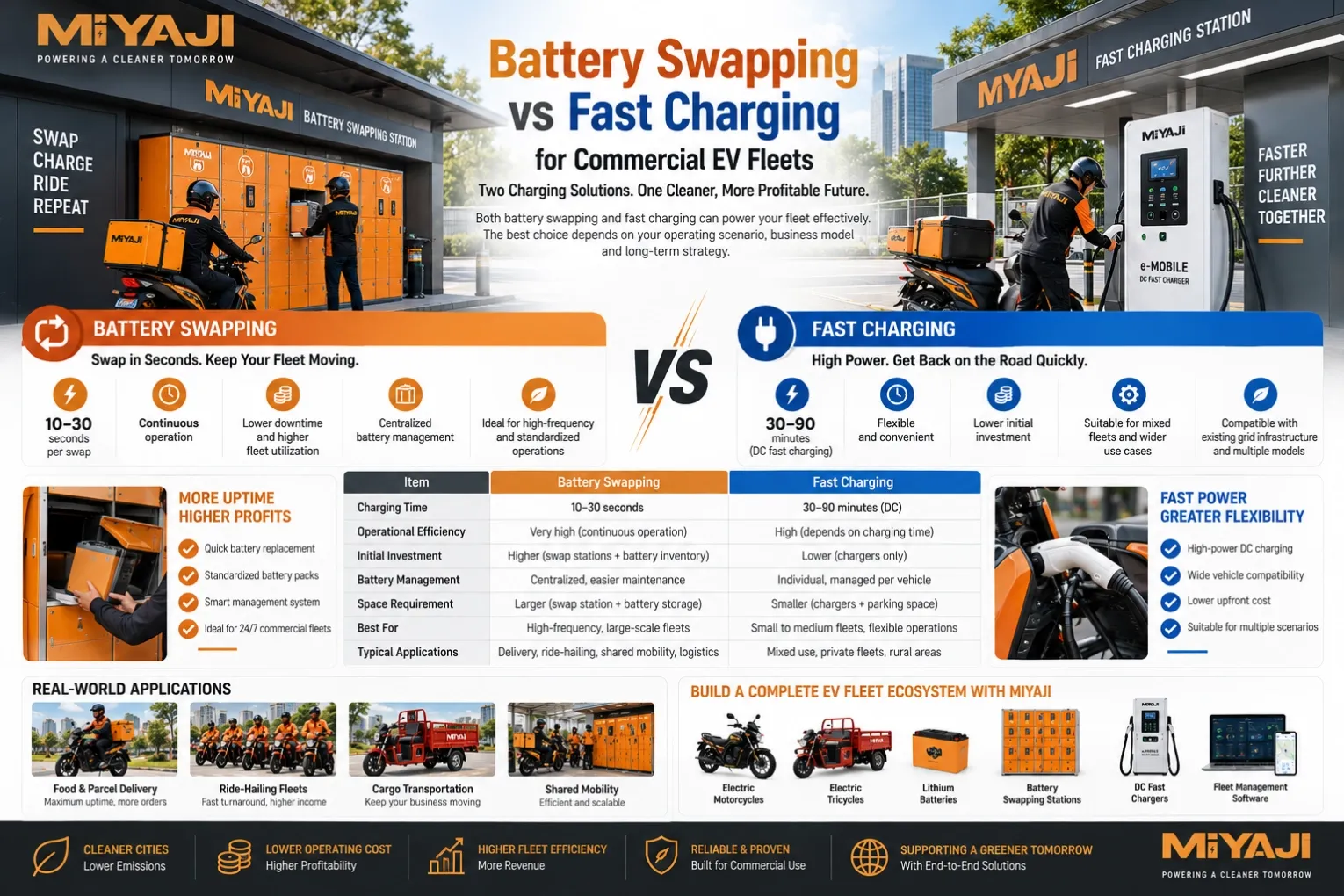
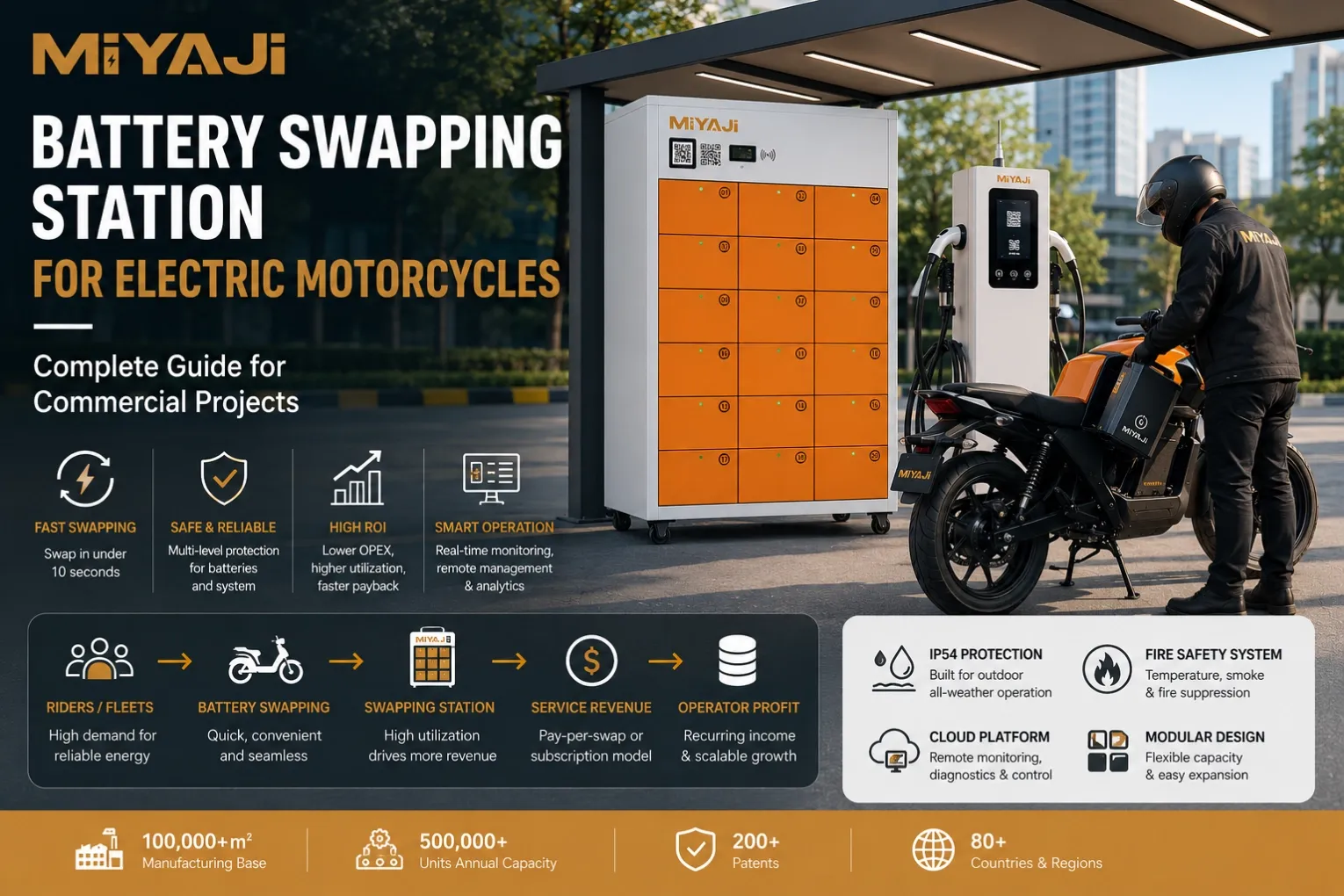
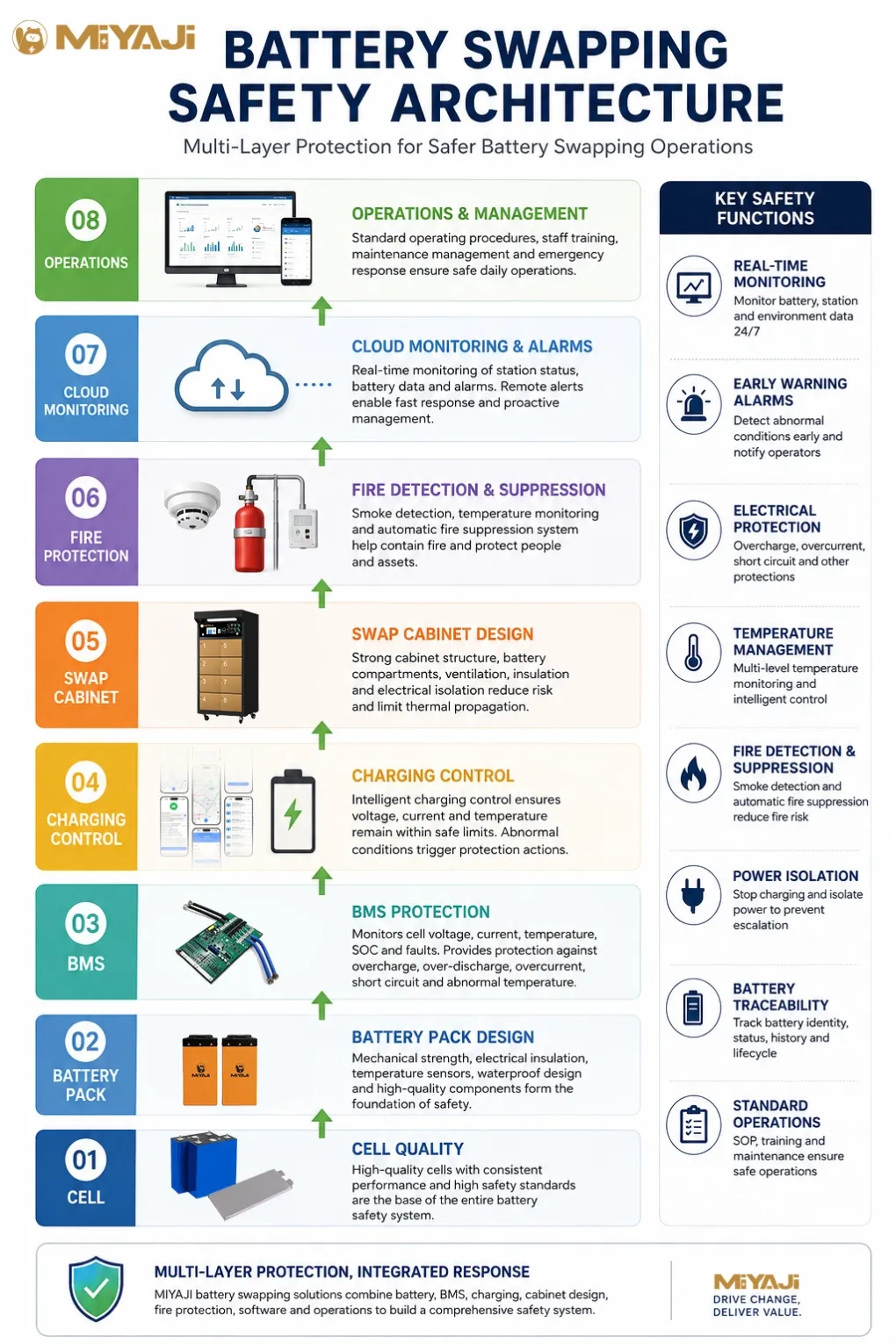
15. Battery Swapping
Battery swapping can be attractive for passenger operations where vehicle downtime directly reduces revenue.
Instead of waiting for the battery to charge, the vehicle exchanges its depleted battery for a charged battery.
But the complete system requires:
Battery
-
Swap Station
-
Charging
-
Software
-
Battery Inventory
It should therefore be evaluated as an operating system rather than simply a vehicle feature.
16. Battery Weight Matters
Passenger three-wheelers can require relatively large battery capacities.
If the battery is designed for manual swapping, weight becomes critical.
Possible approaches can include:
- Smaller standardized battery modules
- Multiple removable batteries
- Mechanically assisted battery handling
The architecture should be designed around the real swap process.
17. Fast Charging
Fast charging may be suitable where:
- Vehicles can stop for short periods
- Electrical infrastructure is available
- Battery cells support the charging requirement
- BMS and charger are compatible
The complete chain must support the required charging power:
Cell
→ PACK
→ BMS
→ Connector
→ Charger
18. Charging vs Swapping for Passenger Operations
Consider the commercial cost of vehicle downtime.
If the vehicle earns revenue only while transporting passengers, long charging periods during peak operating hours may be expensive.
A simplified comparison should therefore consider:
Factor | Charging | Battery Swapping |
|---|---|---|
Vehicle Downtime | Depends on charging strategy | Potentially short |
Extra Battery Inventory | Lower in some models | Usually required |
Infrastructure | Chargers | Stations + battery pool |
Standardization | Moderate | High |
Software Requirement | Useful | Particularly important |
Operational Complexity | Lower in some projects | Higher |
Neither is universally better.
19. Passenger Comfort
Commercial passenger transport competes partly on experience.
Evaluate:
- Seat design
- Legroom
- Suspension
- Noise
- Ventilation
- Weather protection
- Ride quality
A passenger vehicle should not be designed solely around technical specifications.
20. Suspension
Passenger comfort and vehicle stability are both influenced by suspension.
The suspension should be configured for:
- Vehicle weight
- Passenger load
- Route conditions
- Operating speed
Testing should include representative passenger loads.
21. Braking
A passenger vehicle must provide appropriate braking performance under realistic loading.
Evaluate:
- Front braking
- Rear braking
- Parking brake
- Brake maintenance
- Replacement-part availability
Final vehicle configuration must also meet applicable local requirements.
22. Vehicle Stability
Three wheels provide a different stability profile from two-wheel motorcycles.
But stability still depends on:
- Vehicle width
- Wheelbase
- Center of gravity
- Speed
- Passenger distribution
- Suspension
- Tires
A higher vehicle or battery position can affect the center of gravity.
Therefore packaging decisions should consider the whole vehicle.
23. Weather Protection
Depending on the market and application, passenger vehicles may require:
- Roof
- Windshield
- Wipers where applicable
- Doors or side protection
- Rain protection
- Sun protection
A taxi operating all day may need more weather protection than a short-distance resort shuttle.
24. Lighting and Visibility
Commercial passenger vehicles may operate:
- Early morning
- Evening
- Night
Appropriate:
- Headlights
- Tail lights
- Turn signals
- Mirrors
are therefore important for daily operations.
Final specifications should follow local vehicle requirements.
25. Reverse Assistance
For larger enclosed passenger three-wheelers, reverse operation may benefit from features such as:
- Reverse warning
- Camera
- Parking sensors
depending on vehicle design and project requirements.
These features can be particularly useful in dense terminals or parking areas.
26. Maintenance
A passenger fleet should be designed around preventive maintenance.
Common areas include:
- Tires
- Brakes
- Suspension
- Steering
- Motor
- Controller
- Electrical system
- Battery
- Charging connector
The maintenance schedule should reflect actual usage.
27. Spare Parts Availability
Imagine a vehicle generates revenue every day.
A failed component costing only a small amount can still create a significant loss if the vehicle remains out of service for weeks.
Therefore buyers should evaluate:
Spare Parts Lead Time
as part of vehicle procurement.
28. Local Technician Training
For larger overseas fleets, local maintenance capability becomes important.
Technicians may need training in:
- Vehicle systems
- Motor/controller
- Electrical diagnostics
- Battery
- BMS
- Charging
- Swap equipment
- Software
This reduces dependence on remote support for routine service.
29. Fleet Management Software
Connected passenger vehicles can provide useful operational data.
Depending on the system, operators may monitor:
Vehicle
- Location
- Mileage
- Status
- Faults
Battery
- SOC
- SOH
- Temperature
- Alerts
Fleet
- Vehicle utilization
- Downtime
- Energy consumption
- Maintenance
This can become increasingly valuable as fleet size grows.
30. Why Battery Data Matters
Suppose some vehicles consistently consume more energy than others on similar routes.
Possible reasons may include:
- Route
- Payload
- Driver behavior
- Tire condition
- Vehicle issue
Data helps the operator identify differences instead of managing the fleet blindly.
31. Vehicle Uptime
For passenger transport:
Vehicle Uptime = Revenue Opportunity
A vehicle parked because of:
- Charging
- Maintenance
- Battery failure
- Missing parts
cannot carry passengers.
Therefore uptime should be treated as a commercial KPI.
32. Calculate Electric Tuk-Tuk TCO
A simplified TCO model is:
TCO = Vehicle + Battery + Energy + Infrastructure + Maintenance + Spare Parts + Downtime + Financing − Residual Value
But passenger operators should also calculate revenue-side metrics.
33. Cost per Kilometer
A basic metric is:
Total Fleet Cost ÷ Total Fleet Mileage
This allows different vehicle configurations to be compared.
But it does not tell the whole story.
34. Cost per Passenger Trip
For passenger operations, another useful metric is:
Total Operating Cost ÷ Completed Passenger Trips
This connects the vehicle more directly to the business model.
Depending on the operation, buyers can also evaluate:
Cost per Passenger-Kilometer
35. Revenue per Vehicle per Day
A simplified commercial model can use:
Trips per Day × Average Revenue per Trip
to estimate daily vehicle revenue.
Then subtract:
- Energy
- Driver cost
- Maintenance
- Battery cost
- Financing
- Other operating costs
to understand vehicle contribution.
36. A Higher-Priced Vehicle Can Still Be Cheaper
Imagine Vehicle A costs less initially.
But Vehicle B provides:
- Higher uptime
- Lower maintenance
- Better energy efficiency
- More passenger trips
Vehicle B may create better economics despite a higher purchase price.
This is why commercial procurement should compare:
Lifecycle Economics
rather than only FOB price.
37. Start With a Pilot Fleet
Before deploying hundreds of vehicles, conduct a pilot.
The objective is to validate the assumptions used in the business plan.
Measure:
Vehicle
- Reliability
- Loaded performance
- Range
- Comfort
Battery
- Wh/km
- SOC
- Charging
- Temperature
Operation
- Trips/day
- km/day
- Passenger load
- Downtime
Financial
- Energy cost
- Maintenance
- Revenue/vehicle/day
- Cost/trip
Then optimize the configuration before scaling.
38. Ask Drivers and Passengers
Data is important.
So is user feedback.
Ask drivers about:
- Comfort
- Visibility
- Controls
- Acceleration
- Charging
- Maintenance
Ask passengers about:
- Entry/exit
- Seating
- Ride comfort
- Noise
- Cabin environment
These insights can reveal issues that specifications cannot.
39. CBU vs CKD Electric Tuk-Tuk
For initial market entry, CBU can offer:
- Faster deployment
- Lower assembly complexity
- Easier pilot validation
As volume grows, operators or distributors may evaluate:
SKD
or
CKD.
Potential considerations include:
- Logistics
- Import duties
- Local-content policies
- Labor
- Market volume
But local assembly creates additional requirements:
- Factory
- Equipment
- Training
- Quality control
- Inventory
40. Local Battery PACK Assembly
Larger commercial projects may eventually consider local battery PACK production.
A possible development path is:
CBU Deployment
↓
SKD / CKD Vehicle Assembly
↓
Local Battery PACK Assembly
↓
Deeper Localization
This should follow project economics and technical capability rather than being treated as a requirement from day one.
Electric Tuk-Tuk Procurement Checklist
Before requesting a quotation, prepare:
Requirement | Project Information |
|---|---|
Target Country / City | ______ |
Application | Taxi / Shuttle / Other |
Initial Fleet Size | ______ |
Future Fleet Target | ______ |
Passenger Capacity | ______ |
Typical Passenger Load | ______ |
Daily Mileage | ______ km |
Operating Hours | ______ |
Trips per Day | ______ |
Required Speed | ______ |
Route Gradient | ______ |
Battery Strategy | Fixed / Swappable |
Charging | Standard / Fast / Swap |
Cabin Requirements | ______ |
Software | ______ |
Supply | CBU / SKD / CKD |
Local Assembly | Yes / No / Future |
This gives the manufacturer enough information to evaluate the project properly.
How MIYAJI Approaches Electric Tuk-Tuk Projects
MIYAJI approaches commercial passenger vehicles as part of a complete mobility system.
Depending on the project, the solution can integrate:
Electric Passenger Tricycles
-
Lithium Battery Systems
-
Battery Cells & BMS
-
Fast Charging
-
Battery Swapping
-
Fleet & Energy Management Software
-
OEM / CKD & Local Production
Vehicle configuration can be developed around:
- Passenger capacity
- Daily mileage
- Route
- Operating hours
- Battery strategy
- Energy infrastructure
- Fleet scale
- Local production requirements
The objective is not simply to supply an electric tuk-tuk.
It is to configure the vehicle and energy system around the passenger operation.
Planning an Electric Tuk-Tuk Fleet?
Tell us:
Country / City
Passenger Application
Initial Vehicle Quantity
Future Fleet Target
Passenger Capacity
Daily Mileage
Operating Hours
Route Conditions
Required Speed
Battery Preference
Charging / Swapping Strategy
CBU / CKD Requirements
From these inputs, the project can be evaluated across:
Vehicle
→ Battery
→ Energy
→ Software
→ TCO
→ Local Production
Discuss Your Passenger EV Project
Frequently Asked Questions
What is an electric tuk-tuk?
An electric tuk-tuk is a three-wheel electric vehicle used for passenger or commercial mobility applications. Similar vehicles may also be called electric rickshaws or electric passenger three-wheelers.
How many passengers can an electric tuk-tuk carry?
Passenger capacity depends on the vehicle design and rated payload. Buyers should evaluate both seating and the vehicle's intended operating load.
How far can an electric tuk-tuk travel?
Range depends on battery energy, passenger load, speed, route, temperature and vehicle efficiency. Range should be evaluated under relevant operating conditions.
What battery is best for an electric tuk-tuk?
There is no universal best battery. The correct chemistry and capacity depend on range, weight, available space, charging strategy and duty cycle.
Can an electric tuk-tuk use LFP batteries?
Yes. LFP can be used when the vehicle and battery system are designed for the chemistry.
Can an electric tuk-tuk use battery swapping?
Yes. Battery weight, module design, BMS, connectors, station compatibility and battery inventory should all be considered.
Can an electric tuk-tuk support fast charging?
Potentially yes, provided the cell, PACK, BMS, connector and charger support the required charging rate.
Is battery swapping better than charging for electric tuk-tuks?
It depends on vehicle utilization, downtime, infrastructure, battery inventory and operating economics. Neither method is universally better.
How do I calculate electric tuk-tuk operating cost?
Include vehicle, battery, electricity, maintenance, infrastructure, spare parts, downtime and financing. Passenger fleets can also calculate cost per trip and cost per passenger-kilometer.
Should I buy CBU or CKD electric tuk-tuks?
CBU can be suitable for initial deployment, while SKD or CKD may become relevant as volume and localization requirements increase.
Can MIYAJI support a complete electric tuk-tuk fleet project?
MIYAJI can support project configurations covering passenger vehicles, battery systems, charging, swapping, software and local production according to project requirements.