
Aug 29, 2026Product & Industry Knowledge
Battery Swap Management Software for EV Fleets and Swap Networks
Learn how battery swap management software connects batteries, swap stations, vehicles, riders and payments to manage commercial EV networks efficiently.
Battery Swap Management Software: How to Manage Batteries, Stations, Vehicles and Fleet Operations
A battery swapping network is not simply a collection of swap cabinets.
Once an operator manages dozens or hundreds of batteries, multiple stations, riders, vehicles and transactions, the real challenge becomes:
How do you know what is happening across the entire network?
Which batteries are ready?
Which batteries are charging?
Which stations are nearly empty?
Which batteries show abnormal health data?
Which riders are performing swaps?
Which stations generate the most revenue?
Which locations need more battery inventory?
This is where battery swap management software becomes essential.
A modern battery swapping management system connects:
Vehicles + Batteries + Swap Stations + Riders + Payments + Cloud Data
into one operating platform.
For commercial EV operators, the software becomes the digital layer that makes a battery swapping network visible, controllable and scalable.
What Is Battery Swap Management Software?
Battery swap management software is a cloud-based platform used to monitor and manage the assets and operations involved in a battery swapping network.
Depending on the system architecture, it may connect to:
- Electric motorcycles or tricycles
- Battery Management Systems (BMS)
- Battery swap cabinets
- Charging modules
- IoT communication devices
- Rider applications
- Operator dashboards
- Payment systems
- Dealer or franchise accounts
- Fleet management systems
The objective is not simply to display data.
The software should help operators make better operational decisions.
For example:
Which station needs more charged batteries before the evening peak?
Which battery should be removed from circulation for inspection?
Which rider's subscription has expired?
Which station has stopped communicating?
Which batteries are spending too long at high temperature?
These questions cannot be managed effectively with spreadsheets once a network begins to scale.
How Does Battery Swap Management Software Work?
A simplified architecture looks like this:
Battery BMS
↓
Vehicle / Swap Station
↓
IoT Communication
↓
Cloud Server
↓
Management Platform
↓
Operator Dashboard / Rider App / APIs
The battery and station continuously generate operational data.
Depending on the design, this data can include:
- SOC
- SOH
- Voltage
- Current
- Temperature
- Charging status
- Battery ID
- Station ID
- Slot status
- Fault codes
- Swap records
- User identity
- Transaction data
The cloud platform collects and organizes this information so operators can manage the network remotely.
Modern systems increasingly normalize telemetry from batteries and stations and use it for forecasting, inventory planning and health monitoring rather than only basic status reporting.
1. Battery Monitoring
Battery monitoring is one of the most important functions in any swapping platform.
Each battery is a high-value asset.
Operators need to know:
- Where the battery is
- Who is using it
- Whether it is charging
- Whether it is available for swapping
- Whether it is healthy
- Whether it needs inspection
A typical battery dashboard may display:
State of Charge — SOC
How much usable energy remains.
State of Health — SOH
An indication of the battery's condition compared with its expected performance.
Temperature
Useful for detecting abnormal operating or charging conditions.
Voltage and Current
Helpful for evaluating charging and discharging behavior.
Cycle History
Shows how frequently the battery has been used and charged.
Fault Records
Supports maintenance and troubleshooting.
Platforms currently on the market already track real-time status, charging/depletion history and battery location as core functionality.
2. Battery Inventory Management
Battery swapping is fundamentally an inventory-management problem.
At any moment, batteries may be:
Inside vehicles
Charging
Fully charged and ready
Reserved
Offline
Under maintenance
If an operator only knows how many batteries were originally purchased, that information is almost useless.
The important question is:
How many usable charged batteries are available at each station right now?
A good battery swap software platform should provide visibility into battery availability by:
- Station
- Slot
- City
- Region
- Operator
- Battery condition
This becomes increasingly important as the network expands.
A station can physically contain many batteries and still fail operationally if too few are ready when riders arrive.
3. Swap Station Monitoring
The station itself also needs to be monitored.
Operators may need visibility into:
- Online/offline status
- Cabinet door status
- Slot availability
- Charging status
- Communication status
- Temperature
- Energy consumption
- Fault alarms
- Battery inventory
- Transaction activity
Remote monitoring allows the operator to detect problems before riders repeatedly arrive at an unusable station.
Current commercial software platforms commonly include centralized station monitoring, remote device status, cabinet-door information, energy consumption and system alerts.
This matters because a battery swapping network is only useful if the station is actually available when the rider needs it.
4. Vehicle and Fleet Management
For commercial fleets, battery data is only half the picture.
Operators may also need to manage:
- Vehicle ID
- Rider
- Vehicle location
- Battery assigned to vehicle
- Daily mileage
- Energy consumption
- Swap frequency
- Vehicle status
- Maintenance records
This allows the operator to connect:
Vehicle behavior
with
Battery behavior
For example, if one vehicle consistently consumes more energy than similar vehicles, the system can help investigate whether the cause is:
- Payload
- Route
- Riding behavior
- Tire pressure
- Vehicle fault
- Battery condition
This is why more advanced EV platforms increasingly combine battery swapping management with broader fleet management rather than keeping the two completely separate.
5. Rider and User Management
Commercial battery swapping networks usually need to identify who is performing each transaction.
Possible user types include:
- Fleet drivers
- Delivery riders
- Passenger transport riders
- Individual subscribers
- Dealers
- Franchise partners
- Station operators
The platform may manage:
- User account
- Phone number
- Vehicle
- Battery plan
- Account status
- Swap history
- Balance
- Subscription
- Access permissions
This enables operators to control who can use which batteries and stations.
It also creates traceability.
If a battery experiences abnormal use, the operator can see where and when it was used.
6. Billing and Subscription Management
Battery swapping is often connected to a commercial service model.
Common billing structures include:
Pay Per Swap
The rider pays for each battery exchange.
Subscription
The rider pays a fixed recurring fee.
Energy-Based Billing
Charges are linked to electricity or energy consumed.
Fleet Contract
A commercial fleet pays under a negotiated service agreement.
Battery Rental / BaaS
The battery is provided separately from the vehicle under a service model.
The software may therefore need to manage:
- Packages
- Subscription status
- Wallet balance
- Top-ups
- Payment records
- Discounts
- Dealer commissions
- Franchise revenue sharing
Some current platforms already integrate subscription tiers, billing, user management and financial reporting directly into the swapping software layer.
For commercial operators, this makes the software not just an engineering tool.
It becomes part of the revenue system.
7. Alerts and Remote Fault Management
Imagine operating 50 stations in different parts of a city.
It is unrealistic to manually inspect each station every hour.
The system should therefore notify operators when something requires attention.
Possible alerts include:
- Station offline
- Communication failure
- Battery overtemperature
- Abnormal voltage
- Charging fault
- Door fault
- Low battery inventory
- Low charged-battery availability
- BMS communication fault
- Battery health warning
Software does not eliminate hardware failures.
What it does is make failures visible earlier.
That can reduce the time between:
Problem occurs
and
Operator responds
8. Battery Safety Monitoring
Battery safety is not only a hardware issue.
Software can also support battery-risk management.
For example, monitoring systems may identify:
- Abnormal temperature rise
- Unusual voltage behavior
- Excessive charging time
- Repeated faults
- Abnormal discharge patterns
- Battery degradation
A battery showing abnormal data can then be:
flagged
↓
removed from normal swapping
↓
inspected
↓
returned to service or replaced
STIMA, for example, positions safety alerts, fault detection and predictive battery maintenance as part of its battery fleet-management software rather than treating them solely as station-hardware functions.
This is particularly important in swapping networks because batteries circulate between many vehicles and stations.
9. Battery Lifecycle Management
A battery has a financial value as well as an energy value.
The operator therefore needs to understand how that asset changes over time.
Useful lifecycle metrics may include:
- Age
- Cycle count
- SOH
- Energy throughput
- Fault history
- Charging history
- Temperature history
- Maintenance history
This helps operators answer questions such as:
Which batteries should remain in active fleet service?
Which batteries need maintenance?
Which batteries are approaching replacement?
Are some stations causing faster degradation than others?
Battery intelligence is increasingly being used not only for maintenance but also for asset valuation and financing decisions.
That becomes increasingly important when the network owns hundreds or thousands of batteries.
10. Station Demand and Battery Distribution
This is where the software becomes much more interesting.
Imagine three stations.
Station A
30 charged batteries available
5 swaps expected soon
Station B
4 charged batteries available
25 swaps expected soon
Station C
18 charged batteries available
10 swaps expected soon
The total network may have enough batteries.
But the batteries are in the wrong places.
This is a distribution problem, not a battery shortage.
More advanced systems can use:
- Historical swap activity
- Time of day
- Day of week
- Vehicle movement
- Station demand
- Available battery inventory
to help anticipate where charged batteries will be required.
Emerging battery-intelligence platforms are explicitly building station-level forecasting around BMS telemetry to reduce “dry station” events and rider queues.
This is one of the key differences between:
monitoring a network
and
optimizing a network.
11. Operational Analytics
A professional battery swapping platform should help operators understand whether the business is actually performing well.
Useful KPIs can include:
Swaps per Station per Day
Measures station utilization.
Swaps per Rider
Shows usage behavior.
Battery Utilization
Shows how actively batteries circulate.
Station Uptime
Indicates infrastructure reliability.
Energy Consumption
Helps evaluate operating cost.
Battery Health Distribution
Shows the condition of the battery fleet.
Peak Demand
Supports capacity planning.
Revenue per Station
Helps evaluate commercial performance.
Revenue per Rider
Supports business-model analysis.
Commercial platforms already expose swap frequency, energy consumption, revenue information and station-level operating data for this purpose.
Without these metrics, the operator may know the system is running but not know whether it is running efficiently.
12. Multi-Level Operator and Dealer Management
This becomes important for international commercial projects.
Not every battery swapping network is owned and operated by one company.
A network may involve:
Brand Owner
↓
National Operator
↓
Distributor
↓
Franchisee
↓
Station
↓
Rider
Different users need different permissions.
For example:
The brand owner may need access to the entire network.
A country distributor may only see its own market.
A franchisee may only see its own stations.
A rider should only see personal account and swap information.
Some commercial battery-swapping platforms already use multi-level structures for operators, franchisees and stores, including commission and revenue-sharing rules.
For companies planning multi-market expansion, this type of architecture can become very important.
13. Rider App
The management platform is mainly for operators.
The rider usually interacts through a mobile application or another user terminal.
Typical rider functions may include:
- Find nearby stations
- View station availability
- Check battery availability
- View account balance
- View subscription
- Make payment
- View swap records
- Scan QR code
- Authenticate account
- Report problems
Kazam, for example, exposes station discovery, battery availability, swap cost and payment functionality through its driver application.
This means a complete swapping software ecosystem may actually have several interfaces:
Operator Dashboard
Rider App
Station Interface
Dealer / Partner Portal
rather than one single piece of software.
14. APIs and System Integration
Large commercial operators may already use other systems.
For example:
- Fleet management software
- ERP
- CRM
- Payment system
- GPS tracking
- Delivery platform
- Accounting software
Battery swapping software should therefore be able to exchange information with other systems when required.
This can be achieved through:
API integration
rather than building every business function inside one platform.
The more professional EV platforms increasingly emphasize APIs and third-party integration as part of the software architecture.
This becomes especially important for:
- Large fleets
- Telecom/payment integrations
- Government projects
- Distributor networks
- Multi-brand ecosystems
What Should a Battery Swapping Dashboard Show?
For a commercial operator, a practical dashboard should answer five questions quickly.
1. Is the network operating normally?
Station uptime
Faults
Connectivity
2. Do we have enough charged batteries?
Battery availability
SOC
Charging status
3. Are the batteries healthy?
SOH
Temperature
Fault records
4. What are riders doing?
Active riders
Swaps
Usage patterns
5. Is the business performing?
Revenue
Energy cost
Station utilization
Battery utilization
The objective should not be to show as many charts as possible.
It should be to help the operator make decisions.
Basic Software vs Advanced Battery Intelligence
Not every project needs the same software complexity.
A small pilot may only require:
- Battery monitoring
- Station monitoring
- User accounts
- Swap records
- Basic billing
A larger network may require:
- Predictive demand
- Battery redistribution
- Multi-operator management
- Advanced analytics
- API integration
- Predictive maintenance
- Automated billing
- Asset financing data
So software should scale with the business.
A good approach is:
Pilot
→
Collect Data
→
Standardize Operations
→
Add Automation
→
Add Prediction
→
Scale Network
rather than building an unnecessarily complex platform before the business model is validated.
Why Software Matters More as the Network Grows
Consider three stages.
20 Vehicles + 1 Station
The operator may know most users personally.
Manual intervention is still possible.
200 Vehicles + 10 Stations
Now the operator needs centralized monitoring.
2,000 Vehicles + 100 Stations
Manual management becomes impossible.
The business now depends on software for:
- Asset visibility
- Remote operation
- Billing
- Battery health
- Demand forecasting
- Maintenance
- Station performance
This is why full-stack EV companies increasingly describe the cloud platform as the layer coordinating batteries, stations, vehicles and users rather than an optional add-on.
How to Choose Battery Swap Management Software
Before selecting a platform, ask these questions:
- Can it communicate with our BMS?
- Can it manage multiple battery models?
- Can it monitor stations remotely?
- Can it manage users and riders?
- Does it support subscriptions or billing?
- Can it manage multiple operators or distributors?
- Does it provide battery health data?
- Can it support multiple stations and cities?
- Does it offer APIs?
- Can it scale as fleet size increases?
- How are permissions and data separated between operators?
- What happens if a station temporarily loses connectivity?
That final point is often overlooked.
A commercial system should have a clear strategy for unstable communication and data synchronization rather than assuming every device is continuously online. Some newer battery intelligence platforms explicitly distinguish stale/offline data rather than silently treating missing telemetry as valid current data.
Hardware and Software Should Be Designed Together
One common project mistake is selecting:
Vehicle from Supplier A
Battery from Supplier B
Cabinet from Supplier C
Software from Supplier D
and only later trying to connect everything.
Integration can be possible.
But every additional interface introduces questions around:
- Communication protocol
- BMS data
- Battery ID
- Authentication
- Charging control
- Station logic
- API
- Data ownership
- Fault handling
For many commercial projects, it is more efficient to define the system architecture before hardware procurement.
The project should determine:
What data must move between each component?
before asking:
Which cabinet looks best?
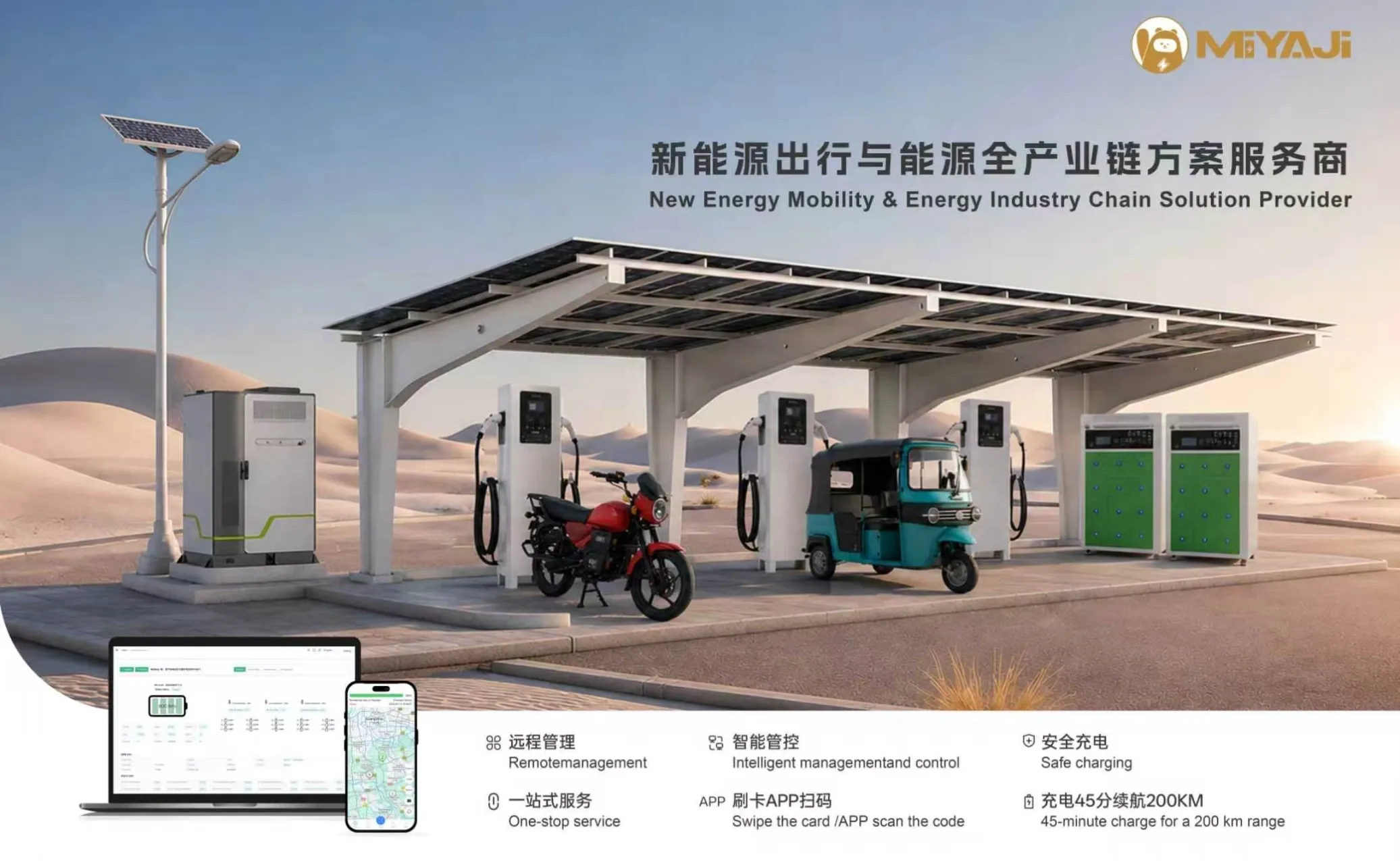
How MIYAJI Approaches Battery Swap Management Software
MIYAJI's battery swapping solution can connect the core elements of a commercial EV project:
Commercial EV
-
Lithium Battery & BMS
-
Battery Swap Station
-
Charging System
-
Management Software
The software layer can be configured around the operating requirements of the project, including functions such as:
- Battery monitoring
- Station management
- User management
- Fleet management
- Swap records
- Alerts
- Asset management
- Operational data
For commercial partners, the objective is to create a coordinated system where hardware and software work together rather than operating as isolated products.
Planning a Battery Swapping Network?
Tell us:
Target Market
Fleet Size
Battery Specification
Number of Stations
Expected Users
Business Model
Payment Requirements
Fleet Management Requirements
and MIYAJI can help evaluate the required hardware, battery communication and software architecture for the project.
CTA Button
Discuss Your Software & System Requirements
Frequently Asked Questions
What is battery swap management software?
It is a software platform that manages batteries, swap stations, users, vehicles and operational data in a battery swapping network.
Can battery swap software monitor battery health?
Yes, when connected to a compatible BMS, the platform can receive data such as SOC, SOH, voltage, temperature, cycle information and faults.
Can battery swap software support payment and subscriptions?
Yes. Depending on the platform configuration, it can support subscription plans, pay-per-swap billing, account balances and other payment models.
Does battery swapping software include fleet management?
It can. Commercial platforms may connect vehicle, rider, battery and station data so fleet operators can manage them within one ecosystem.
Can one platform manage multiple battery swap stations?
Yes. Multi-station management is one of the main reasons cloud-based battery swapping software becomes important as a network scales.
Can battery swap software connect with third-party systems?
It can when the platform provides suitable APIs and communication interfaces. Integration requirements should be defined during project design.
Is battery swap software necessary for a small pilot?
A pilot can operate with a simpler software configuration, but basic battery, station and transaction monitoring is still valuable because the data collected during the pilot helps determine how the network should scale.