
Aug 28, 2026EV E2W/E3W Business Insights
Battery Swapping Station Cost: Complete Cost Breakdown for Electric Motorcycle Fleets
Understand battery swapping station costs, including cabinets, batteries, software, installation, electricity and operating expenses for commercial EV projects.
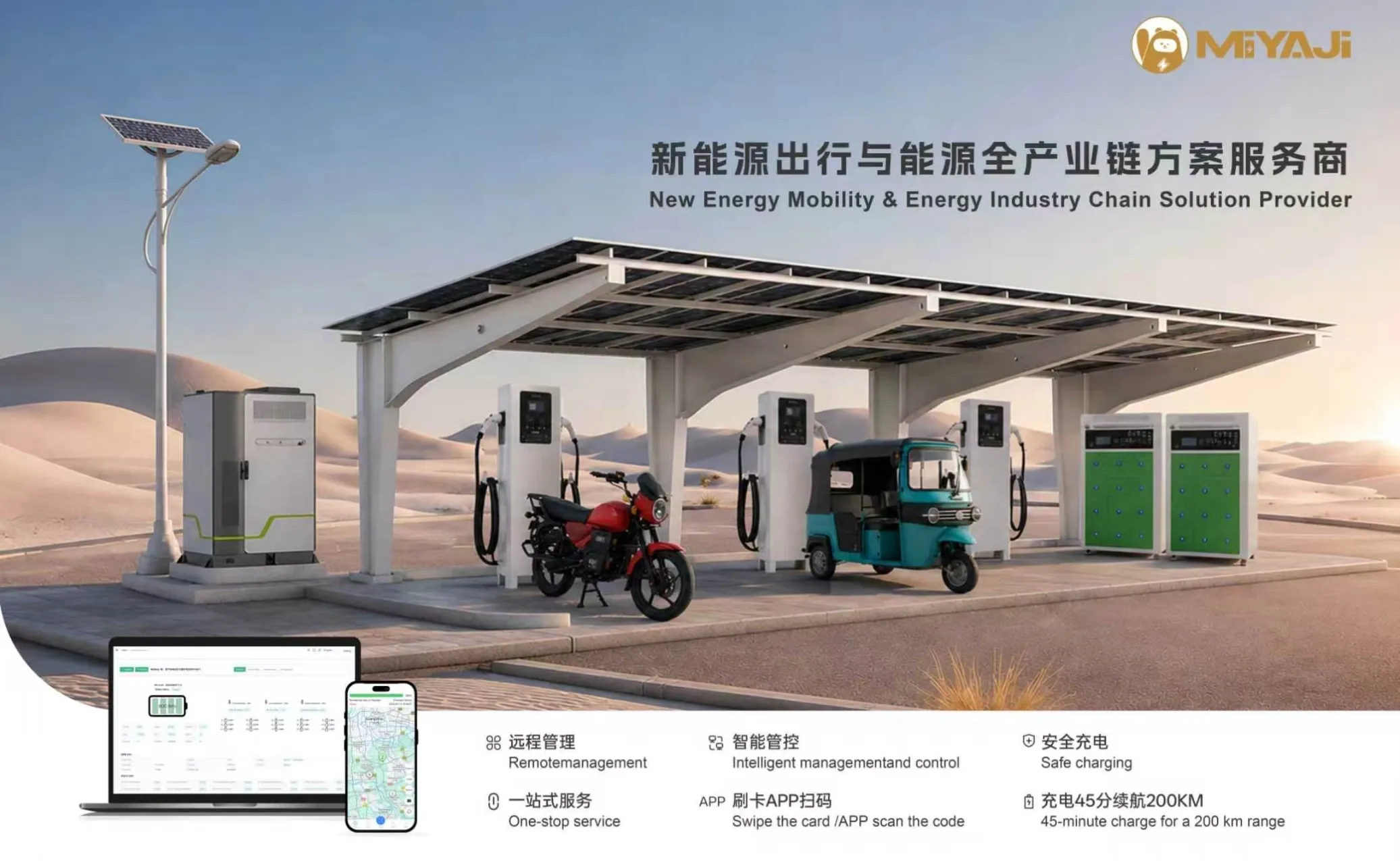
Battery Swapping Station Cost: Hardware, Batteries, Software and Operating Costs Explained
One of the first questions operators ask when planning an electric motorcycle battery swapping project is:
How much does a battery swapping station cost?
The problem is that there is no meaningful answer based on the swap cabinet price alone.
A commercial battery swapping project normally includes several cost layers:
Swap Station + Batteries + Software + Electrical Infrastructure + Installation + Site + Operations
For larger fleets, the battery inventory can even become one of the most important parts of the investment.
Therefore, when comparing battery swapping station prices, fleet operators and investors should evaluate the complete system cost, not simply the quotation for one cabinet.
This guide explains the major cost components and how to estimate a realistic budget for an electric motorcycle or light commercial EV battery swapping project.
What Determines the Cost of a Battery Swapping Station?
The total project cost is mainly affected by six factors:
- Swap station configuration
- Number and specification of batteries
- Fleet size and daily energy demand
- Software and communication requirements
- Site and electrical infrastructure
- Operation and maintenance model
Two projects using the same cabinet can therefore have completely different budgets.
For example, a small pilot serving 20 motorcycles is very different from a network designed for several hundred vehicles operating across multiple locations.
The correct question is not:
“How much is one battery swap cabinet?”
It is:
“How much does the complete swapping system required for my fleet cost?”
1. Battery Swap Station Hardware Cost
The swap station itself is the most visible part of the system.
Its cost varies according to configuration, including:
- Number of battery slots
- Battery voltage and capacity
- Charging module power
- Cooling or ventilation design
- Fire protection system
- Display and user interface
- NFC / QR / RFID identification
- Communication modules
- Payment integration
- Outdoor protection level
- Cabinet structure
- Remote monitoring functions
- Custom branding
A basic cabinet serving a small number of batteries will naturally cost less than a larger station with integrated charging, communication, safety and software functions.
Public supplier examples show that typical two-wheeler swap cabinet prices can vary substantially by specification. One 2026 industry supplier guide, for example, lists approximate overseas-order prices of around US$1,400–2,000 for some 10-slot cabinets, but this should be treated only as a market reference rather than a universal project price.
For a professional project, the station hardware should therefore be quoted based on the actual battery and operating requirements.
2. Battery Inventory: Often the Largest Hidden Cost
Many first-time buyers underestimate the cost of batteries.
A swap station is useful only when it has enough charged batteries available when riders arrive.
That means the project normally needs more batteries than vehicles.
For example:
Vehicles in operation
+
Batteries charging inside stations
+
Reserve batteries
+
Maintenance / backup inventory
The exact battery-to-vehicle ratio cannot be fixed universally.
It depends on:
- Battery capacity
- Vehicle energy consumption
- Daily mileage
- Number of swaps per day
- Charging time
- Station utilization
- Peak demand
- Reserve strategy
- Battery degradation
This is why the battery inventory can sometimes represent a larger investment than the swap cabinets themselves.
Battery-as-a-Service models used by operators such as Gogoro separate the battery from the vehicle and treat batteries as network assets managed through subscriptions and continuous monitoring.
That business model changes both the capital structure and the revenue model of a swapping project.
3. How Much Does a Swappable Battery Cost?
Battery cost depends heavily on:
- Chemistry
- Voltage
- Capacity
- Cell brand
- Pack structure
- BMS
- Communication protocol
- Connector design
- Waterproofing
- Thermal management
- Certification requirements
- Order quantity
A small light-mobility battery and a high-capacity commercial motorcycle battery should not be compared using one unit price.
Public supplier estimates for 48–72V swappable two-wheeler batteries can range broadly—from a few hundred dollars upward depending on capacity and specification. One current industry reference gives approximately US$240–680 per pack across different light two-wheeler configurations.
Again, this is useful only as a rough market reference.
For actual project planning, the correct calculation is:
Battery unit cost × required battery inventory
not simply:
Battery price × number of vehicles.
4. Battery Swap Software Cost
Modern swapping systems are increasingly software-driven.
Once an operator manages multiple stations and hundreds or thousands of batteries, manual management becomes impractical.
A battery swap management platform may include:
- Battery ID management
- SOC monitoring
- SOH monitoring
- Station status
- Battery availability
- Charging status
- Fault alarms
- User accounts
- Rider identification
- Subscription plans
- Pay-per-swap billing
- Payment integration
- Fleet management
- Asset tracking
- Reports and analytics
Large-scale networks such as Gogoro use cloud-connected systems to manage batteries and station demand dynamically across their network. Gogoro says its SmartGEN platform monitors operational parameters and helps determine where energy and future station capacity are needed.
Therefore software should be included in the investment calculation from the beginning.
Depending on the business model, software costs may include:
Initial system setup
plus
Recurring cloud / SaaS / communication expenses
plus
Custom development or payment integration
5. Electrical Infrastructure and Grid Connection
Battery swapping does not eliminate charging infrastructure.
The batteries still need electricity.
Each site must therefore be evaluated for:
- Available electrical capacity
- Transformer capacity
- Distribution board
- Cabling
- Protection equipment
- Metering
- Peak power demand
- Electricity tariff
- Backup power requirements
- Future expansion
A station operating ten batteries is very different from a high-volume site charging dozens of batteries continuously.
Electricity costs also depend on when batteries are charged.
One advantage of a managed swapping system is that charging can potentially be scheduled rather than occurring immediately whenever a rider arrives.
Research published in 2026 on integrated charging and swapping infrastructure found that load shifting and peak management can materially affect annual operating costs, showing why electricity tariffs and grid charges should be included in economic modelling.
So the cost calculation should include both:
Electrical installation CAPEX
and
Electricity OPEX
6. Site and Installation Cost
A battery swapping station needs a physical location.
Depending on the project, site-related costs may include:
- Rent
- Site preparation
- Concrete foundation
- Electrical work
- Internet or communication connection
- Canopy or weather protection
- Security
- Signage
- Local permits
- Transportation
- Installation
- Commissioning
Site strategy matters because a technically good station in the wrong location can still have poor utilization.
Large networks therefore treat station location as an operational planning problem rather than simply placing cabinets wherever space is available. Gogoro, for example, describes its network software as helping determine where energy demand and future stations should be located.
For new projects, location planning should consider:
Where riders actually travel
rather than simply:
Where rent is cheapest.
7. Operating and Maintenance Costs
Battery swapping infrastructure continues to generate costs after installation.
Typical operating expenses may include:
- Electricity
- Site rent
- SIM / communication fees
- Software subscriptions
- Maintenance
- Spare parts
- Battery replacement
- Technical support
- Customer service
- Staff
- Battery redistribution
- Payment processing
Some networks can operate with relatively little staff at each individual station because battery inventory, station health and transactions are monitored remotely.
Gogoro, for example, emphasizes remote monitoring, connected battery management and automatic station operations as important parts of its network model.
However, remote operation does not mean zero operating cost.
The larger the network becomes, the more important centralized maintenance and asset management become.
CAPEX vs OPEX: How to Think About Battery Swapping Costs
A useful way to evaluate the project is to separate costs into:
CAPEX — Initial Investment
Typically includes:
- Swap stations
- Batteries
- Electrical infrastructure
- Installation
- Site preparation
- Software setup
- Vehicles, if included
- Initial spare parts
OPEX — Ongoing Operating Cost
Typically includes:
- Electricity
- Rent
- Software/cloud services
- SIM/data
- Maintenance
- Battery replacement
- Staff
- Customer support
- Payment fees
- Logistics
This distinction becomes important when comparing different business models.
A project with higher upfront battery inventory may reduce vehicle downtime and support more operating hours.
Therefore:
Lower CAPEX does not automatically mean lower total operating cost.
Example: How to Estimate a Battery Swapping Project Budget
Instead of using a fixed universal price, start with an operational model.
Imagine a hypothetical commercial motorcycle fleet.
Step 1 — Determine Fleet Size
Example:
100 electric motorcycles
Step 2 — Estimate Daily Energy Consumption
You need:
Daily mileage × energy consumption per kilometer
This determines how much energy the fleet actually consumes.
Step 3 — Determine Swaps per Vehicle
Based on:
- Battery capacity
- Usable energy
- Vehicle efficiency
- Daily mileage
Step 4 — Calculate Peak Swap Demand
Not all swaps happen evenly during the day.
You must estimate:
How many riders may arrive during peak periods?
Step 5 — Determine Battery Inventory
Include:
- Batteries installed in vehicles
- Batteries charging
- Ready batteries
- Operational reserve
Step 6 — Determine Station Capacity
Then calculate:
How many slots and stations are required to support peak demand?
Step 7 — Add Software and Site Costs
Only after the operational requirements are clear should the project budget be finalized.
This is much more reliable than deciding:
“I will buy five 10-slot cabinets.”
and trying to make the fleet fit the hardware afterward.
Why One Battery Swap Station Price Can Be Misleading
Suppose Supplier A quotes:
US$1,500 per cabinet
and Supplier B quotes:
US$2,500 per cabinet.
It may appear that Supplier A is cheaper.
But Supplier B's system may include:
- Higher charging power
- Integrated fire protection
- Remote monitoring
- Better communication
- Larger battery compatibility
- Software
- Cloud management
- Technical support
Meanwhile Supplier A's price may cover only the physical cabinet.
Therefore the buyer should compare:
System Scope vs System Scope
not:
Cabinet Price vs Cabinet Price
This is particularly important for international projects where communication protocol, electrical standards, payment systems and operating environment may require customization.
Battery Swapping Business Models Also Change the Cost Structure
The ownership model directly affects investment.
Common approaches include:
1. Fleet-Owned System
The fleet owns:
- Vehicles
- Batteries
- Stations
This provides high control but normally requires more upfront capital.
2. Battery-as-a-Service
The operator may separate battery ownership from vehicle ownership.
Users pay through:
- Monthly subscriptions
- Energy usage
- Swap fees
- Rental plans
Gogoro uses subscription-based battery services, including fleet plans for high-volume commercial users.
Other swapping models also separate vehicle and battery financing; a NITI Aayog / ADB case study of Sun Mobility, for example, describes users obtaining vehicles without batteries while the swapping provider supplies batteries through the energy network.
This can reduce the initial vehicle purchase burden while shifting battery cost into the energy-service business.
3. Pay-Per-Swap
The user pays each time energy is exchanged.
This is conceptually similar to buying fuel.
It may be appropriate for less predictable usage but requires accurate transaction and payment management.
4. Franchise or Partner Network
Stations may be installed and operated by:
- Dealers
- Fuel stations
- Local retailers
- Fleet partners
- Franchisees
This can reduce the capital required from one central operator but introduces network-management and revenue-sharing considerations.
Is a Battery Swapping Station Profitable?
A station is not profitable simply because people perform swaps.
Profitability depends on:
Revenue per swap or subscription
minus
Energy + battery depreciation + station depreciation + rent + maintenance + software + staff + financing
The most important factor is often utilization.
A station that performs very few swaps may never recover its investment.
A heavily utilized station can spread its fixed costs over many transactions.
Therefore investors should track metrics such as:
- Swaps per station per day
- Active riders
- Energy sold
- Battery utilization
- Revenue per rider
- Electricity cost
- Station uptime
- Battery replacement cost
- Customer acquisition cost
- Station payback period
This is why a battery swapping business should be designed as an operating network, not merely an equipment purchase.
Start With a Pilot Before Building a Large Network
For a new market, it is often smarter to validate the operating model before installing a large number of stations.
A pilot can test:
- Vehicle energy consumption
- Rider behavior
- Daily swap frequency
- Battery demand
- Peak periods
- Station utilization
- Payment model
- Electricity cost
- Software reliability
- Maintenance requirements
Then the project can scale based on actual data.
This approach is especially useful because assumptions made on spreadsheets often change once vehicles begin operating commercially.
A practical progression can be:
Pilot Fleet
↓
Measure Actual Demand
↓
Optimize Battery Ratio
↓
Optimize Station Capacity
↓
Validate Business Model
↓
Scale Network
How MIYAJI Helps Estimate Battery Swapping Project Cost
MIYAJI approaches battery swapping projects from the complete operating system rather than quoting only a cabinet.
A project evaluation can include:
Commercial EVs
-
Swappable Lithium Batteries
-
Battery Swap Stations
-
Charging Infrastructure
-
Energy Management Software
-
Project Configuration
The required hardware and battery inventory can then be estimated based on operational inputs such as:
- Target market
- Fleet size
- Vehicle type
- Daily mileage
- Battery capacity
- Operating hours
- Expected swaps per day
- Available electrical capacity
- Number of operating sites
- Planned expansion
This makes the project budget more closely aligned with actual fleet requirements.
Planning a Battery Swapping Project?
To prepare an initial configuration, provide:
Target Market
Fleet Size
Daily Mileage per Vehicle
Vehicle Type
Battery Voltage & Capacity
Operating Hours
Number of Planned Locations
Expected Project Scale
MIYAJI can then help evaluate the required battery quantity, swap station capacity, software configuration and energy infrastructure.
CTA Button
Request Project Configuration
Frequently Asked Questions
How much does a battery swapping station cost?
The price depends on station capacity, charging power, battery specification, software, communication functions and safety configuration. The cabinet price alone does not represent the complete project investment.
What is the biggest cost in a battery swapping project?
In many projects, battery inventory can be one of the largest cost components because the operator requires batteries in vehicles, batteries charging in stations and reserve inventory.
How many batteries are needed for one battery swap station?
There is no fixed number. Battery quantity should be calculated from fleet size, daily mileage, battery capacity, charging time, swap frequency and peak demand.
How many battery swap stations are needed for 100 electric motorcycles?
It depends on vehicle mileage, swaps per day, station capacity, rider routes, peak demand and location. A 100-vehicle fleet does not automatically require a specific fixed number of stations.
Is battery swapping profitable?
It can be, but profitability depends heavily on station utilization, battery cost, energy cost, pricing model, rent, maintenance and the number of paying users.
Should I start with one station or build a full network?
For an untested market, a pilot deployment is often useful because it provides real operating data before larger capital is committed.